

 By Rachel Torres
Quick Answer
Community infrastructure costs, including Mello-Roos taxes, CFD assessments, and HOA fees, can add hundreds to thousands of dollars per month to the true cost of owning a new construction home in Southern California. Understanding these charges before signing a purchase agreement helps buyers protect their budget, qualify for the right loan amount, and negotiate smarter with builders.
Introduction
Buying a brand new home in Southern California often comes with a surprise that never appears on the builder's glossy price sheet. Community infrastructure costs quietly shape the real monthly payment, sometimes adding 20 to 40 percent on top of a standard property tax bill. These charges pay for the roads, schools, parks, and utilities that make new housing developments possible, and they follow the home long after the ribbon is cut. Buyers who tour a model home in Irvine or Rancho Cucamonga without asking about them can end up locked into decades of assessments they never budgeted for. That gap between sticker price and actual carrying cost is where most first-time buyers get burned.
Key Takeaways:
Mello-Roos taxes and CFD assessments can add 0.5 to 1.5 percent to your effective property tax rate in new construction communities.
HOA fees, infrastructure bonds, and closing charges are separate line items that stack on top of your mortgage and traditional taxes.
A dedicated buyer's agent can uncover these costs upfront and use them as leverage when negotiating incentives with the builder.

What Community Infrastructure Costs Actually Are
Community infrastructure costs are the charges a new development uses to pay for the shared systems that make the neighborhood work. When a builder breaks ground on a new master-planned community, someone has to fund the streets, sewer lines, streetlights, community pools, and often the local elementary school. In Southern California, that bill gets passed down to the buyers who move in.
The Three Charges You Need to Know
Most new construction homes in SoCal carry some combination of three specific costs. Each one shows up differently on your closing documents and your monthly statements, so knowing what to look for matters.
Mello-Roos taxes: Special taxes tied to a Community Facilities District that funds public infrastructure like schools, roads, and fire stations, usually lasting 25 to 40 years.
CFD assessments: Bond-based charges levied by a Community Facilities District, often bundled with Mello-Roos on your property tax bill and calculated by lot size or square footage.
HOA fees: Monthly dues paid to the homeowners association for maintaining shared amenities, landscaping, and community rules enforcement.
Special assessments: One-time or recurring charges for specific projects like new parks or road repairs within the development.
Developer transfer fees: Small percentage-based fees triggered when the home changes hands, sometimes lasting for decades after the original sale.
Why These Costs Exist in New Construction
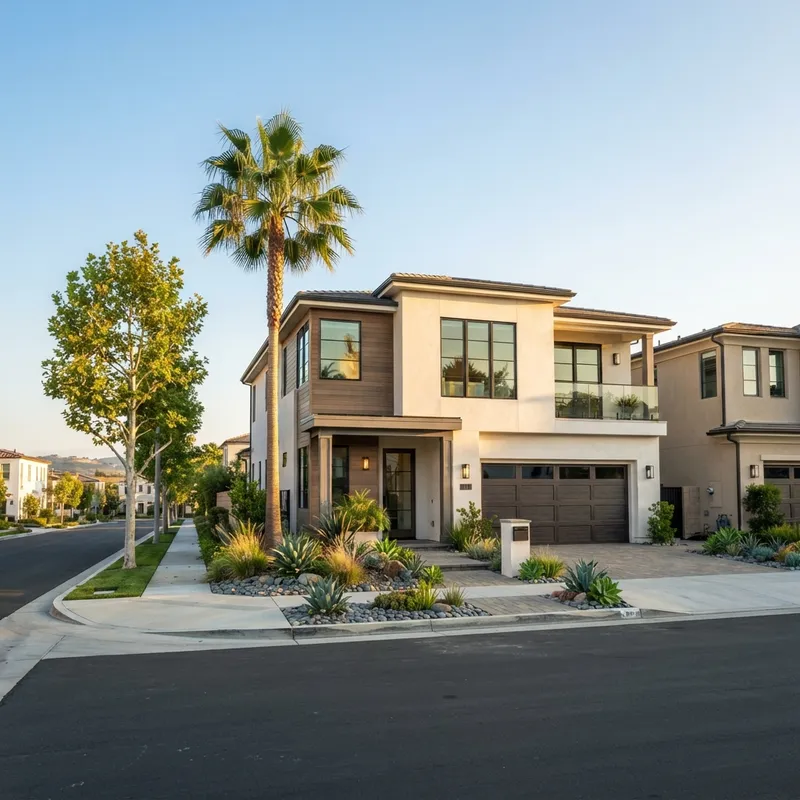
Cities in Southern California stopped funding new infrastructure through general taxes decades ago, which is why builders and municipalities now rely on tools like CFDs to finance growth. When you buy a resale home in an older neighborhood, the roads and schools were paid for generations ago. In a new housing development, you are essentially buying into a shared bond that pays back the cost of building everything from scratch. The community infrastructure guide at Ease breaks down how these financing mechanisms work in practice across different SoCal markets. Detailed research from the Terner Center on development fees shows just how significantly these charges vary between California cities, with per-unit fees ranging into the tens of thousands.
How These Costs Impact Your Monthly Payment
The sticker price on a new build home tells you what the house costs, but not what living in it costs. Community infrastructure charges hit your monthly budget in three places: your escrow account for taxes, your HOA billing cycle, and sometimes a separate direct assessment. Together they can shift a comfortable payment into a stretch.
Comparing the Real Cost of Two SoCal Communities
Two new construction homes at the same price point can carry wildly different monthly obligations depending on how the development was financed. Consider a hypothetical comparison between a home in a heavily Mello-Roos-funded community versus one in a lighter-assessment neighborhood.
Cost Component | Community A (Heavy CFD) | Community B (Light CFD) | Resale Home |
|---|---|---|---|
Base Property Tax (1.1%) | $825/mo | $825/mo | $825/mo |
Mello-Roos / CFD | $450/mo | $120/mo | $0 |
HOA Fees | $285/mo | $180/mo | $0-$80/mo |
Total Monthly Add-On | $1,560/mo | $1,125/mo | $825-$905/mo |
The takeaway is stark. Community A costs an extra $435 per month compared to Community B for the same $900,000 home, which adds up to more than $130,000 over a 25-year Mello-Roos period. Reviewing property taxes alongside CFD schedules before you write an offer is how you avoid learning about that gap after closing.
Effects on Loan Qualification
Lenders factor Mello-Roos and HOA charges into your debt-to-income ratio, which means a community with heavier assessments can shrink the loan amount you qualify for. A buyer approved for $850,000 in a low-assessment neighborhood might only qualify for $780,000 once the higher CFD is added to the equation. This is one of the most common reasons buyers get blindsided during the underwriting phase, and it is one of the hidden costs that never gets mentioned in the model home tour.
How to Prepare for and Negotiate Around Infrastructure Costs
You cannot make Mello-Roos disappear, but you can absolutely factor it into your negotiation strategy and long-term plan. Builders know these charges exist and often have room to offset them through incentives, upgrades, or rate buydowns, especially in slower quarters.
Questions to Ask Before Signing a Purchase Agreement
Walk into every builder sales office armed with the same set of questions. The answers will separate communities with reasonable long-term costs from ones that will drain your budget for the next three decades. Ask about the total effective tax rate, the duration of the CFD, whether the assessment escalates annually, and what the HOA covers versus what remains a separate charge. Working with a HOA fees guide before you tour helps you evaluate what those dues actually deliver. A knowledgeable new construction purchase expert like the team at Ease can pull the CFD disclosure documents for any community in Irvine, Anaheim, or Chino before you commit, so you know exactly what you are signing up for.
Using Infrastructure Costs as Negotiation Leverage
Higher community assessments actually give buyers more room to push on other terms. When Mello-Roos is significant, builders are often more willing to offer rate buydowns, design center credits, or reduced closing costs to keep the deal moving. The key is knowing the local market well enough to ask for the right concession. Investopedia's overviews of Mello-Roos financing and homeowners association structures are useful primers, but the real leverage comes from understanding how a specific builder in a specific SoCal submarket has flexed on incentives in the last 90 days.

Conclusion
Community infrastructure costs are not a reason to avoid buying new construction, but they are a reason to walk in with full information and skilled representation. The buyers who come out ahead treat Mello-Roos, CFDs, and HOA fees as data points that shape their offer strategy, not as fine print to skim past. Comparing communities side by side, running the real monthly math, and asking builders the right questions turns these costs from a surprise into a lever. That is the difference between paying the sticker price and paying the true price. Ease exists to make sure Southern California buyers land on the right side of that line.
Ready to see exactly what community infrastructure will cost you before you sign? Talk with Ease to get a full cost breakdown, expert negotiation support, and 1% back at closing on your next new construction home.
Frequently Asked Questions (FAQs)
What costs should I expect when buying a new construction home?
Beyond the purchase price, expect standard closing costs, property taxes, HOA dues, and community infrastructure charges like Mello-Roos or CFD assessments that can add 15 to 40 percent to your monthly housing expense.
What are Mello-Roos taxes in California new construction?
Mello-Roos taxes are special assessments levied by a Community Facilities District to repay bonds that funded infrastructure like schools, roads, and fire stations, typically lasting 25 to 40 years after the community is built.
How does a CFD affect my new home purchase in Southern California?
A CFD adds a separate line item to your annual property tax bill that increases your effective tax rate and reduces the loan amount most lenders will approve, sometimes by tens of thousands of dollars.
What is the difference between HOA fees and infrastructure assessments?
HOA fees pay for ongoing maintenance of shared amenities and are paid to a private association, while infrastructure assessments like Mello-Roos are public taxes that repay bonds used to build community infrastructure.
Why do new construction homes have higher property taxes?
New construction homes carry higher effective tax rates because they typically include CFD assessments or special taxes to fund the fresh infrastructure that older resale neighborhoods paid off decades ago.
Is it worth using a real estate agent for new home builds?
Yes, because a dedicated buyer's agent represents your interests rather than the builder's, uncovers hidden infrastructure costs upfront, and negotiates incentives that most solo buyers never think to request.
What questions should I ask a builder about community infrastructure costs?
Ask for the total effective tax rate, the duration and escalation schedule of any Mello-Roos or CFD, the full HOA fee breakdown, and any special assessments planned for the development over the next decade.
About the Author
Rachel Torres is a New Home Advisor at Ease with a background in Southern California real estate. She specializes in guiding first-time and move-up buyers through the new construction process, with deep expertise in builder incentives, community financing structures, and the SoCal housing market.
