

 By Ryan Borden
Quick Answer
An Eastvale new-build payment includes more than principal and interest: account for base property taxes, community assessments such as Mello-Roos, HOA dues, homeowners insurance, and any loan-related costs. The advertised builder price can still fit your budget, but only after each recurring charge is verified for the specific lot and added to the monthly estimate.
Introduction
Buyers considering new homes in Eastvale should request a complete monthly-cost worksheet before reserving a lot, not after falling in love with a floor plan. A new build can carry a base property tax bill, Mello-Roos assessments, HOA dues, insurance, and financing costs that do not appear in a builder's headline price. Eastvale's base property tax rate is typically 1% of assessed value, while additional assessments can bring the effective rate to approximately 1.2%, according to Simplicity Financial's overview of Eastvale property tax rates. The important number is the payment you can sustain after move-in, not the payment shown before community charges are disclosed.
Key Takeaways:
- Verify every recurring charge for the exact lot before signing a builder contract.
- Base taxes, Mello-Roos, HOA dues, and insurance belong in one monthly budget.
- Builder incentives can reduce upfront costs but do not erase ongoing community obligations.

How to calculate a new build monthly payment in Eastvale
Start with the mortgage payment, then add each ownership cost that will recur after closing. Principal and interest depend on your loan amount, rate, term, down payment, and any rate buydown. The rest of the estimate comes from the property's tax bill, the HOA's budget and disclosures, the insurance quote, and the lender's monthly escrow calculation.
Separate fixed loan costs from community charges
A useful budget assigns every charge to its source so you can see what may change after closing. Ask the builder for documents rather than accepting a verbal estimate, especially in new build communities where the first homeowners may not yet have a long payment history.
- Principal: Pays down the amount borrowed.
- Interest: Pays the lender for financing.
- Property taxes: Follow the assessed purchase value.
- Mello-Roos: Funds district-approved local improvements or services.
- HOA dues: Support shared community operations.
Use the purchase price as the tax starting point
For property tax budgeting, use the contract price as the starting assessed value and then review the preliminary tax information for the parcel. The cited Eastvale property tax example shows that a $500,000 purchase produces approximately $5,000 in annual base property tax at the 1% rate, before additional assessments. For a deeper explanation of timing and estimates, review this property tax budgeting resource before you compare lender worksheets.
New construction can also trigger supplemental assessments when the county recognizes a change in ownership or completed improvements. Riverside County explains that a qualifying change between January 1 and May 31 requires a second supplemental assessment for the next fiscal year, and two assessments result in two separate bills. Read the county's supplemental assessment process so an unexpected bill does not derail your first-year cash plan.
Do not treat a supplemental bill as a new monthly HOA-like fee. It is a tax-billing event tied to reassessment, while your ongoing monthly estimate should reserve funds for regular taxes and confirmed special assessments.
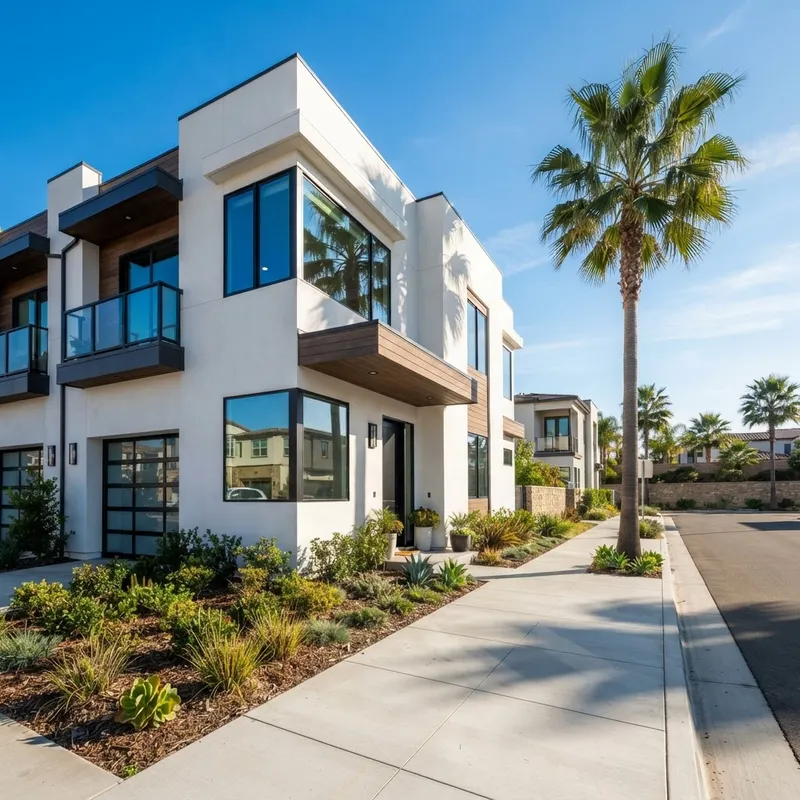
HOA fees new construction buyers need to verify
HOA fees new construction buyers pay vary by community because the association's obligations vary. Dues may cover landscaping, gates, private streets, recreation areas, exterior maintenance, management, reserves, or amenities. The builder should provide the association documents and current dues before you commit, because the neighborhood's physical features, not the home's square footage alone, drive the cost.
Read HOA disclosures like a monthly expense report
California HOA paperwork deserves the same scrutiny as a loan estimate. A published California overview places single-family homes in planned-unit developments at $100–$300 per month, while luxury buildings or resort communities can run $1,000–$2,500+ per month, according to Accredited Real Estate Schools' California HOA fee ranges. Those figures are broad context, not an Eastvale quote, so the community's written disclosure remains the only amount to use in your budget.
Ask whether dues are established, projected, or subject to an initial operating period; this new-build HOA fees guide can help frame the review. Also request the budget, reserve information, insurance responsibilities, amenity maintenance scope, and rules that could affect future spending. California law requires associations to conduct periodic reserve planning and provide annual reserve disclosures, making reserve planning a practical document to review rather than background paperwork.
Compare recurring costs before comparing floor plans
Two homes with similar prices can produce different monthly obligations if one community has an HOA and special assessment while another does not. This table separates the charges buyers should identify before deciding whether a home is financially comfortable.
| Payment component | What determines it | How it appears | Buyer action |
|---|---|---|---|
| Principal and interest | Loan amount, rate, and loan terms | Monthly lender payment | Compare official loan estimates |
| Base property tax | Assessed purchase value | Usually escrowed monthly | Model from contract price |
| Mello-Roos assessment | Parcel and community district | Tax bill or escrowed payment | Request the lot-specific tax record |
| HOA dues | Association budget and amenities | Monthly association payment | Review current disclosures |
| Homeowners insurance | Home, carrier, coverage, and deductible | Monthly escrow or direct premium | Obtain a written quote |
The largest mistake is estimating only the mortgage and then treating the other rows as minor details. A buyer should compare complete payment stacks for each lot, including charges that a lender may collect through escrow and charges paid directly to the HOA.

Questions to ask before signing an Eastvale builder contract
Ask for answers in writing before the reservation deposit or purchase agreement locks in your decision. A builder sales office represents the builder, so buyers benefit from independently reviewing the payment estimate, lot-specific assessments, and incentive terms. Ease works exclusively for buyers of new construction homes in Southern California, helping them examine builder timelines, upgrades, financial terms, and negotiations from the buyer's side.
Confirm Mello-Roos and tax details for the exact parcel
A Mello-Roos obligation on a new home is not interchangeable with standard property tax, and the amount can differ across nearby tracts. Ask for the parcel number, current tax bill or estimate, district name, stated assessment components, payment schedule, and whether the builder has disclosed any pending changes. Use a Mello-Roos tax guide to distinguish a special assessment from the base property tax portion of your bill.
Also ask how taxes are handled at closing and whether lender escrow will collect them monthly; review your first property tax bill expectations before closing. Owners who disagree with a supplemental value notice should review Riverside County's current appeal instructions promptly, since the appeal window is time-limited.
Price insurance and first-year cash needs separately
Insurance should be quoted before closing because the property, coverage choices, deductible, and carrier determine the premium. New-build insurance costs can differ from resale quotes when reconstruction features or association responsibilities differ, so obtain a carrier-specific estimate and review new-build insurance costs alongside the lender's escrow estimate. Keep cash for move-in items, utility setup, window coverings, appliances not included by the builder, and any supplemental tax billing that arrives outside the ordinary monthly mortgage payment.
Conclusion
A realistic Eastvale payment begins with principal and interest, then adds base taxes, Mello-Roos, HOA dues, insurance, and first-year tax timing. Request lot-specific documents, compare full payment stacks, and avoid relying on a broad community estimate when deciding what you can afford. Buyers who want representation during that review can use Ease's negotiation support and its 1% cash rebate at closing, up to $30,000, which may be applied toward closing costs. For buyers seeking a clearer financial picture and buyer-side advocacy, Ease can help them navigate a new construction purchase from contract through closing.
Want help reviewing a builder's numbers? Connect with Ease for buyer-focused new construction guidance.
Frequently Asked Questions (FAQs)
What is Mello-Roos tax on a new home?
Mello-Roos tax on a new home is a parcel-specific special assessment that may fund district-approved public facilities or services, so buyers should obtain the exact lot's tax information rather than assuming every home in a community carries the same obligation.
How much are HOA fees for new construction homes?
HOA fees for new construction homes vary by association budget and amenities, although a published California overview lists $100–$300 monthly for single-family planned-unit developments and higher amounts for communities with more extensive shared facilities.
How does new construction financing work?
New construction financing works by matching your approved loan, down payment, lender disclosures, and builder contract timeline, while the lender estimates escrowed taxes and insurance separately from charges such as HOA dues that you may pay directly.
Are new construction homes in Eastvale affordable?
New construction homes in Eastvale are affordable only when the buyer's income, cash reserves, loan terms, taxes, HOA dues, insurance, and parcel-specific assessments fit together in a sustainable monthly and first-year ownership budget.
What should I budget for monthly payments on a new build?
You should budget for monthly payments on a new build by combining principal, interest, base property tax, Mello-Roos where applicable, HOA dues, homeowners insurance, and any lender-required mortgage insurance shown in your loan estimate.
How do Mello-Roos taxes compare to regular property taxes?
Mello-Roos taxes compare to regular property taxes as an additional special assessment, whereas Eastvale's base property tax is typically 1% of assessed value and community assessments can increase the effective rate to approximately 1.2%.
About the Author
Ryan Borden is a New Home Advisor with experience in new construction, builder incentives, and Southern California housing decisions. As a Project Manager at Freemodel and Co-Founder of a stealth AI startup, he brings an operational perspective to helping first-time and move-up buyers translate builder details into practical financial decisions.
