

 By Rachel Torres
Quick Answer
On most Southern California new construction homes, a percentage-based rebate saves you significantly more than a flat fee rebate. Because SoCal new builds routinely price between $700,000 and $1.5 million, a 1% cash-back model can return $7,000 to $15,000 at closing, while flat fee programs typically cap payouts far lower regardless of purchase price.
Introduction
Buyer rebates have become one of the most talked-about ways to lower the real cost of a new construction home, especially in higher-priced markets like Irvine, Anaheim, and Mission Viejo. Yet many buyers assume every rebate program returns roughly the same amount, when in reality the rebate structure decides how much cash lands in your pocket at closing. A flat fee real estate rebate pays a fixed dollar amount regardless of home price, while a percentage rebate scales with the purchase amount. On a $1.2 million SoCal new build, that structural difference can be worth more than $10,000. That gap is not theoretical, and understanding why it exists is the first step to choosing the right buyer representation.
Key Takeaways:
Flat fee rebates pay the same dollar amount whether your home costs $500,000 or $1.5 million.
Percentage rebates scale with price, which is why they outperform on higher-value new construction homes.
On typical SoCal new builds, a 1% cash-back model returns thousands more than most flat fee programs.

How Buyer Rebates Actually Work on New Construction
When you buy a new construction home, the builder typically pays a commission to the buyer's agent out of the sale price. A buyer broker rebate gives a portion of that commission back to you, the buyer, and can be applied directly toward new construction closing costs, prepaids, or your down payment. The rebate is legal in California and most other states, and it does not come out of the builder's pocket in a way that reduces your negotiation leverage.
Flat Fee Rebates Explained
Flat fee real estate rebate programs pay a set dollar amount at closing, no matter what the home costs. Some programs advertise a fixed rebate like $2,500 or $5,000. Others use a flat service fee model where the agent keeps a small fixed amount and returns the rest, though those are less common on new construction.
Predictability: You know the exact dollar figure before you start shopping.
Simple math: No calculations tied to purchase price or upgrades.
Ceiling risk: The rebate does not grow as your home price grows.
Service tradeoffs: Some flat fee models limit hands-on negotiation or builder representation.
Percentage Rebates Explained
A percentage-based real estate commission rebate returns a set percent of the purchase price, most commonly 1%, back to you at closing. On a $900,000 home that is $9,000. On a $1.4 million home that is $14,000. The math is straightforward, and the payout rises with the value of the property you buy. There is a helpful breakdown of flat fee options and commission rates that shows how these two structures compare across different price bands. Because SoCal new builds tend to sit well above the national median, the percentage model consistently produces a larger check for buyers here.
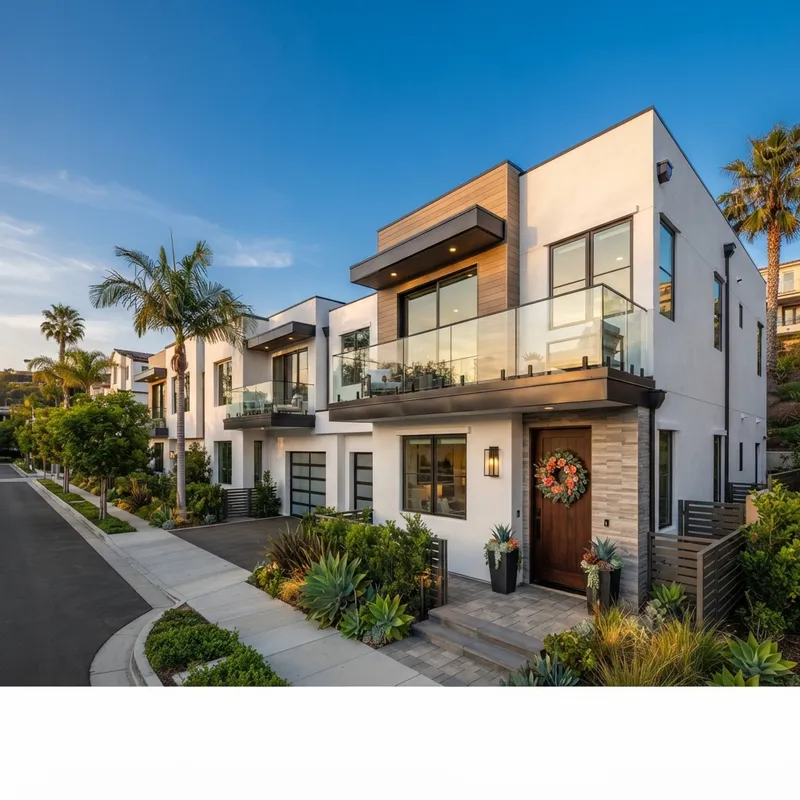
Flat Fee vs. Percentage Rebate: The Southern California Math
The best way to see the difference is to run the numbers across the price points buyers actually encounter in Irvine, Chino, Yorba Linda, and Mission Viejo. Assume a flat fee rebate of $5,000, which is on the higher end of what most flat fee programs advertise, and a 1% percentage rebate.
Side-by-Side Rebate Comparison
Here is how each rebate structure plays out across common SoCal new construction price points.
Home Price | Flat Fee Rebate | 1% Percentage Rebate | Difference |
|---|---|---|---|
$650,000 (Chino) | $5,000 | $6,500 | +$1,500 |
$850,000 (Anaheim) | $5,000 | $8,500 | +$3,500 |
$1,100,000 (Mission Viejo) | $5,000 | $11,000 | +$6,000 |
$1,400,000 (Irvine) | $5,000 | $14,000 | +$9,000 |
$1,750,000 (Irvine luxury) | $5,000 | $17,500 | +$12,500 |
The pattern is consistent. Once your purchase price crosses roughly $500,000, the percentage rebate pulls ahead, and the gap widens quickly as price climbs. Industry data on flat fee versus percent commission models shows the same crossover point in most higher-priced metros. For Southern California buyers, that means a flat fee rebate almost always leaves money on the table.
When a Flat Fee Might Still Make Sense
Flat fee rebates are not automatically the wrong choice. If you are buying a lower-priced condo or townhome under $450,000, the flat fee could match or slightly exceed a 1% rebate. Some buyers also prefer the certainty of a fixed number, particularly if they are budgeting closing costs down to the dollar. That said, most brand new construction inventory in priority SoCal markets prices well above that break-even line, which shifts the advantage back to the percentage model. Companies like Ease use the 1% structure specifically because it aligns the rebate with the reality of local prices.
Choosing the Right Rebate for a New Construction Purchase
Rebate structure matters, but so does the representation attached to it. A larger rebate is only truly valuable if the agent behind it is negotiating hard on your behalf with the builder, decoding upgrade pricing, and helping you time incentives. Otherwise, you may collect a bigger check while losing more than that in overpaid upgrades or missed rate buydowns.
What to Look for Beyond the Rebate
Before you commit to any rebate program, examine what you actually receive alongside the cash back. Full builder negotiation, upgrade guidance, and closing coordination often matter as much as the rebate size. A helpful guide to home buyer rebates lays out how representation and rebate structure work together in 2026. Ease pairs its 1% cash back with dedicated buyer advocacy across the entire new construction process, from lot selection through final walkthrough, and buyers can compare structures further by reviewing the best rebate companies serving new build markets.
The takeaway: pick the rebate model that pays fairly at your price point, and pick the team that will fight for every dollar of builder concessions on top of it.
Applying Your Rebate at Closing
Most buyers apply the rebate directly to closing costs, which reduces the cash you bring to the table without touching your loan amount. Others use it toward a rate buydown or to fund upgrades the builder would not include for free. Either way, understanding buyer rebates at closing ahead of time helps you plan how to deploy the money for maximum impact. And if you are weighing builder promotions against your rebate, it is worth reviewing how builder incentives versus rebates stack when combined thoughtfully.
Conclusion
For most Southern California new construction buyers, a percentage-based rebate produces a materially bigger check at closing than a flat fee program, and the difference grows with every step up the price ladder. Flat fee rebates have a place at lower price points or when certainty matters most, but they lose ground fast in markets like Irvine and Mission Viejo. Focus on the total value you receive: a fair rebate structure, real builder negotiation, and clear guidance through the closing process. Run the numbers on your target price point before signing with any agent, and treat the rebate as one piece of a broader financial outcome. Choose the structure that scales with the home you are actually buying, not the one that sounds simplest on paper.
Curious how much you would actually get back on your target SoCal new build? Talk with the Ease team to see your personalized 1% cash-back estimate and negotiation plan before you visit the sales office.
Frequently Asked Questions (FAQs)
How does a flat fee real estate rebate work?
A flat fee rebate returns a fixed dollar amount to the buyer at closing regardless of the home's purchase price.
What is a real estate commission rebate?
It is a portion of the buyer's agent commission that is returned to the buyer at closing, often applied toward closing costs or the down payment.
Is it legal to get a commission rebate in California?
Yes, buyer commission rebates are fully legal in California and are commonly used on new construction purchases.
Is a flat fee rebate better than a percentage rebate?
A flat fee can be better on lower-priced homes, but a percentage rebate almost always pays more on Southern California new builds priced above roughly $500,000.
How much can I save with a percentage-based rebate?
At 1% cash back, buyers typically save between $7,000 and $17,500 depending on whether the home is priced from $700,000 to $1.75 million.
Can the builder pay for my closing costs?
Builders sometimes offer closing cost credits as incentives, and pairing those with a buyer rebate can significantly reduce your out-of-pocket cash at closing.
What is the best rebate option for new construction homes in Orange County?
For most Orange County new builds, a 1% percentage rebate paired with dedicated buyer representation delivers the strongest financial outcome.
About the Author
Rachel Torres is a New Home Advisor at Ease with a background in Southern California real estate and a focus on helping first-time and move-up buyers navigate new construction. She specializes in decoding builder incentives, upgrade pricing, and rebate structures so buyers walk into the sales office already knowing where the real savings live.
