

 By Rachel Torres
Introduction
Buying a new construction home in Southern California is exciting, but the process looks nothing like purchasing a resale property. Builders control the timeline, the contracts are written in their favor, and the sales reps in those polished model homes work for the builder, not for you. A solid home buying checklist built specifically for new construction keeps you from missing critical steps that could cost thousands of dollars or lock you into unfavorable terms. The difference between a confident purchase and a stressful one often comes down to whether you knew what to watch for at each phase.
Key Takeaway: New construction purchases require a buyer-specific checklist covering builder contracts, financing timelines, upgrade negotiations, and final walkthroughs, because the standard home buying process does not account for the unique risks and opportunities that come with buying from a builder.

Phase One: Research and Preparation
Before you ever step foot in a model home, the groundwork you lay during the research phase shapes every decision that follows. Skipping this stage is one of the most common new construction mistakes buyers make, and it often leads to overpaying or choosing the wrong community.
Getting Your Finances and Priorities in Order
Your first time home buyer checklist should start well before you tour any properties. Locking down your financial picture early gives you leverage and prevents surprises once you are deep into a builder's sales process.
Get pre-approved (not just pre-qualified): Builders take pre-approved buyers more seriously, and it clarifies your true budget before emotions take over at the design center.
Research builder-preferred lenders carefully: Builders often offer incentives for using their lender, but compare rates and fees against outside lenders to confirm the deal is genuinely better.
Define your non-negotiable features: Separate must-haves from nice-to-haves so you can evaluate floor plans and communities objectively instead of getting swept up in model home staging.
Understand the full cost picture: New construction prices often exclude lot premiums, structural options, and HOA fees that add tens of thousands to the base price.
Check builder reputation and track record: Look up the builder's license status through the California Department of Real Estate, read reviews from recent buyers, and visit completed communities to see build quality firsthand.
Why Buyer Representation Matters from Day One
Many buyers assume they can walk into a builder's sales office and handle everything themselves. The reality is that builder sales representatives are trained to maximize the builder's profit, not to protect your interests. Having a buyer's agent who specializes in new construction means someone is reviewing contracts, questioning pricing, and negotiating on your behalf from the very first visit. If you register at a builder's sales office without your agent present, some builders will refuse to recognize your agent later, which means you lose representation entirely.
Phase Two: Contracts, Upgrades, and Financing
Once you have selected a community and floor plan, the real complexity begins. This phase is where most buyers either protect themselves or unknowingly give up leverage, and a thorough new construction home checklist is essential for staying on track.
Reviewing the Builder Contract and Negotiating Terms
Builder contracts are not standard real estate purchase agreements. They are lengthy, builder-drafted documents designed to protect the builder's interests at nearly every turn. A proper builder contract review should flag clauses related to construction delays, price escalation, cancellation penalties, and arbitration requirements.
Many buyers do not realize that builder incentives and upgrades are negotiable, especially in slower markets or during end-of-quarter sales pushes. According to Redfin's guide on negotiating with builders, buyers who come prepared with comparable sales data and professional representation consistently secure better outcomes. Common negotiation wins include rate buydowns, free design center upgrades, lot premium reductions, and closing cost credits. The key is knowing which negotiating strategies work with specific builders in your market.
Locking Down Your Financing Timeline
New construction financing works differently than resale because the home may not be finished for months after you sign the contract. Your new construction financing plan needs to account for rate lock timing, potential construction delays, and deposit schedules that can stretch across several milestones. If your rate lock expires before the builder finishes, you could face significantly higher monthly payments or need to pay extension fees.
Southern California buyers should also explore state and local assistance programs. The CalHFA Dream For All program and other California-specific options can reduce down payment requirements, which frees up cash for upgrades or reserves. Coordinate with your lender early to understand exactly when each financial milestone hits and what documentation you will need at each stage.
Phase Three: Construction, Walkthrough, and Closing
The final stretch of your new home purchase checklist covers the period between contract signing and getting your keys. This is where attention to detail pays off most, because once you close, fixing problems becomes significantly harder and more expensive.
Monitoring Construction and Preparing for the Walkthrough
Most builders allow scheduled site visits during construction. Take advantage of every opportunity to see your home's progress, photograph framing, plumbing, and electrical work before drywall goes up. These photos become invaluable if warranty issues arise later.
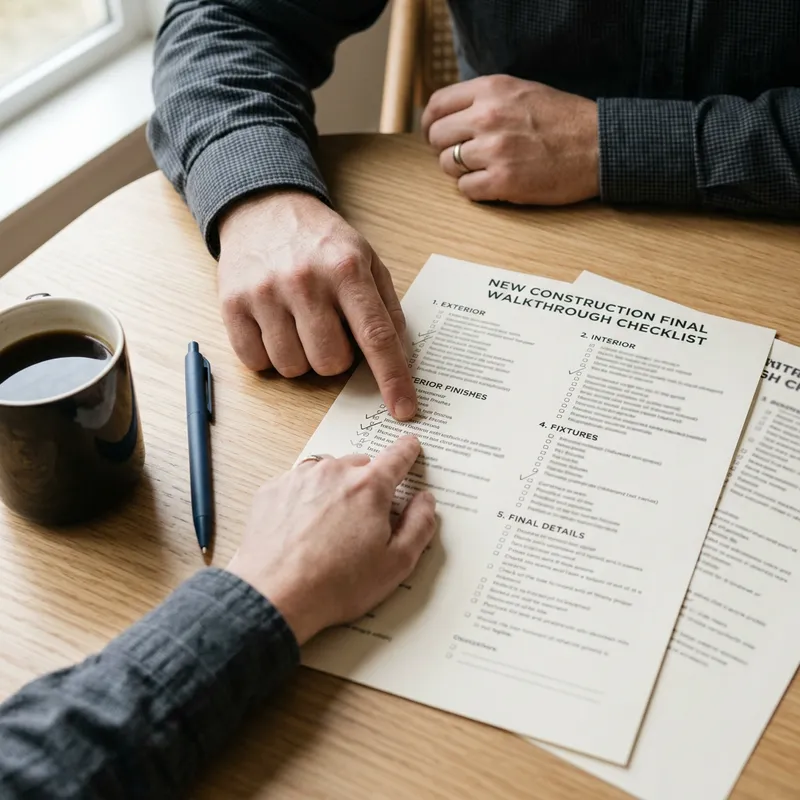
The final walkthrough is your last chance to document defects before closing. This is not a casual tour. Bring a detailed final walkthrough checklist and test every outlet, faucet, appliance, window, and door. Check for paint imperfections, flooring gaps, cabinet alignment issues, and any deviations from your original selections. Builders are generally willing to fix cosmetic and functional issues identified during the walkthrough, but they become far less responsive after you have signed closing documents.
Understanding Your Warranty and Closing Costs
New construction homes typically come with a builder warranty, but coverage varies dramatically. Most include a one-year warranty on workmanship, a two-year warranty on mechanical systems, and a ten-year structural warranty. Read the warranty document carefully to understand what is covered, what is excluded, and what deadlines exist for submitting claims. Many buyers are surprised to learn that cosmetic issues often have a 30-day reporting window after closing.
Closing costs on new construction can also catch buyers off guard. Builder contracts sometimes shift costs to the buyer that would traditionally be negotiable in a resale transaction. Title fees, transfer taxes, HOA initiation fees, and Mello-Roos assessments are all line items that deserve scrutiny. Working with a brokerage like Ease can help offset these costs, since their buyers receive up to 1% of the purchase price back as a cash rebate at closing, which can be applied directly toward closing costs that often surprise new construction buyers.
Putting It All Together
The difference between a smooth new construction purchase and a frustrating one comes down to preparation. Following a structured new construction checklist before closing ensures you catch contract red flags, negotiate from a position of strength, and avoid the financial surprises that trip up so many buyers. Southern California's new construction market moves quickly, and builders are sophisticated sellers. Ease gives buyers across Irvine, Rancho Cucamonga, Mission Viejo, and communities throughout the region the professional representation and financial advantage that levels the playing field. Start your new construction purchase timeline with the right advocate, and every step that follows becomes clearer.
Frequently Asked Questions (FAQs)
What should I look for when buying a new construction home?
Focus on the builder's reputation, contract terms, lot premiums, included versus upgraded features, warranty coverage, and HOA or Mello-Roos obligations, since these factors impact your total cost and long-term satisfaction far more than model home finishes.
How do I negotiate with builders on new construction?
Come prepared with comparable sales data, ask for rate buydowns or design center credits instead of price reductions, and time your offer near quarter-end when builders are motivated to close deals.
Why should I use a buyer's agent for new construction?
A buyer's agent reviews builder contracts, negotiates pricing and incentives on your behalf, and ensures your interests are protected throughout a process that is otherwise entirely controlled by the builder.
What happens at the final walkthrough of a new home?
You systematically inspect every room, fixture, appliance, and surface to document defects or incomplete work so the builder can address them before you sign closing documents.
What closing costs should I expect for new construction?
Expect title and escrow fees, lender charges, HOA initiation fees, potential Mello-Roos assessments, and any builder-specific transfer costs, which can total 2% to 5% of the purchase price in Southern California.
Is it better to buy new construction or resale?
New construction offers modern floor plans, energy efficiency, and builder warranties, while resale homes often provide established neighborhoods and lower per-square-foot pricing, so the right choice depends on your priorities and budget.
What are builder incentives and upgrades?
Builder incentives are financial perks like rate buydowns, closing cost credits, or free upgrades that builders offer to attract buyers, and they are often negotiable, especially when inventory is sitting or a community is nearing sellout.
