
 By Rachel Torres
Introduction
A new construction home inspection is one of the smartest investments a buyer can make before closing, yet many new home buyers skip it entirely because the house is brand new. The assumption is understandable: if a home was just built, what could possibly be wrong? In reality, builder walkthroughs and independent inspections serve fundamentally different purposes, and only one of them is designed to protect the buyer. Construction defects, code shortcuts, and cosmetic cover-ups show up in new builds far more often than most people expect. Knowing the difference between these two processes can save buyers tens of thousands of dollars in repairs they should never have to pay for.
Key Takeaway: A builder walkthrough checks for surface-level finish issues the builder is willing to fix, while an independent home inspection evaluates the full construction quality of the home from an unbiased perspective, giving buyers leverage to request repairs or renegotiate before closing.
What a Builder Walkthrough Actually Covers
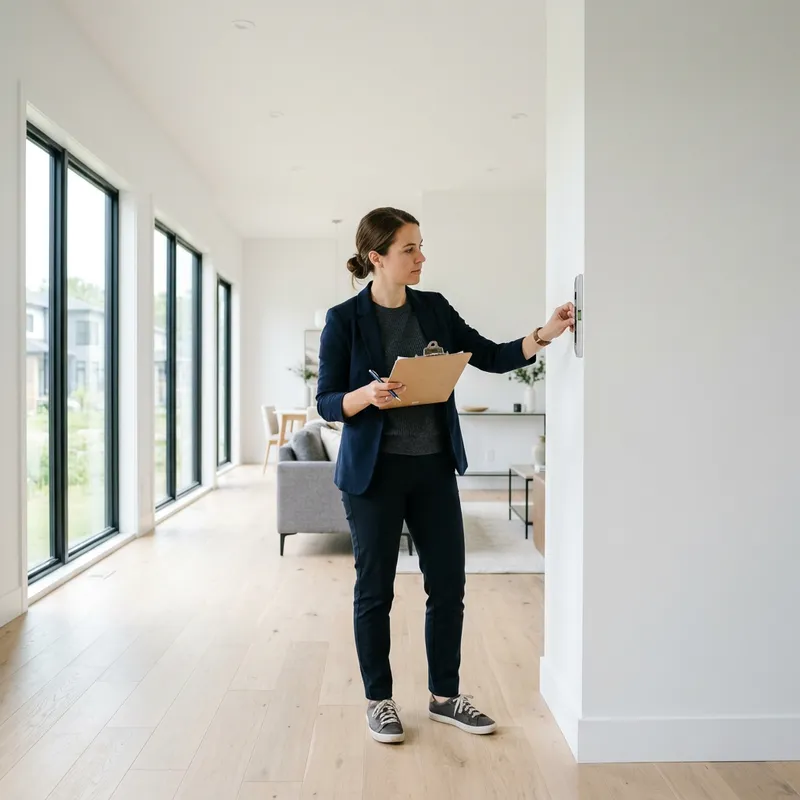
Before closing on a new construction home, the builder typically schedules a walkthrough (sometimes called a blue tape walk or orientation) where a representative walks you through the finished home. This process is standard, but understanding its limitations is critical for buyers who want to protect their investment.
The Builder Walkthrough Process
During a builder walkthrough, a builder representative walks room by room with the buyer, pointing out features and marking cosmetic issues with blue painter's tape. The focus is almost entirely on visible, surface-level items the builder is prepared to address before closing. Here is what typically gets flagged:
Paint and drywall imperfections: Scuffs, uneven textures, nail pops, and missed spots on walls and ceilings
Fixture and hardware checks: Loose cabinet handles, crooked outlet covers, and scratched appliance surfaces
Flooring blemishes: Scratches on hardwood, chipped tile, or carpet stains from the construction process
Door and window alignment: Doors that stick, windows that do not latch properly, or visible gaps in weatherstripping
Countertop and trim damage: Chips in stone countertops, misaligned baseboards, or poorly caulked edges
Why the Builder Walkthrough Has Limits
The person leading your walkthrough works for the builder. Their job is to manage your expectations, resolve minor cosmetic complaints, and get you to sign off on the home so the sale can close. They are not trained or incentivized to look behind walls, crawl into attics, or evaluate whether plumbing and HVAC systems were installed correctly. A new home walkthrough checklist can help buyers stay organized during the process, but even a thorough buyer cannot replace the expertise and tools a licensed inspector brings. Builder walkthroughs are not inspections. They are customer service appointments designed to resolve the easiest issues while leaving structural and mechanical questions unasked.

What an Independent New Construction Home Inspection Covers
An independent home inspector works for the buyer, not the builder, and evaluates the home's construction quality across every major system. This is the pre-closing home inspection that gives buyers real leverage and a clear picture of what they are actually purchasing.
Builder Inspection vs Independent Inspection: A Side-by-Side Look
The difference between a builder-led walkthrough and an independent new build home inspection becomes clear when you compare what each process evaluates. The table below breaks down how these two approaches differ across the categories that matter most to buyers.
Category | Builder Walkthrough | Independent Inspection |
|---|---|---|
Who conducts it | Builder's representative | Licensed third-party inspector |
Primary loyalty | Builder / seller | Buyer |
Scope | Cosmetic and visible finish items | Structural, mechanical, electrical, plumbing, roofing, and cosmetic |
Tools used | Blue tape, visual observation | Thermal cameras, moisture meters, electrical testers |
Report provided | Punch list (often informal) | Detailed written inspection report with photos |
Code compliance check | No | Evaluates beyond minimum code for quality and longevity |
Negotiation leverage | Minimal | Strong, documented findings support repair or credit requests |
The takeaway is straightforward: a builder walkthrough catches what the builder is comfortable fixing, while an independent inspector catches what the builder might prefer you never find. Understanding the differences between building inspectors and home inspectors helps buyers see why code compliance alone does not guarantee a well-built home. Buyers who rely solely on the walkthrough are accepting the builder's version of "ready" without any independent verification.
Common Red Flags Independent Inspectors Find
New home inspection red flags in new construction are more common than buyers expect. Rushed construction timelines, subcontractor turnover, and high production volume all contribute to mistakes that slip past municipal code inspections. Problems that inspectors find in newly constructed homes range from improperly graded drainage to HVAC ducts that were never sealed.
An independent inspector working in Southern California commonly uncovers issues like missing attic insulation, reversed hot and cold water lines, common new construction mistakes with flashing around windows, and electrical panels with code violations. These are not cosmetic complaints. They are defects that affect safety, energy efficiency, and the long-term durability of the home. A thorough new construction inspection report documents each finding with photos and descriptions, giving buyers the evidence they need to request corrections before they sign closing paperwork.
When and How to Schedule Your Independent Inspection
Timing matters when scheduling a new construction home inspection in Orange County or anywhere in Southern California. Knowing exactly when to bring in your inspector, and how to choose the right one, can make the difference between catching problems early and inheriting them at closing.
The Right Timing for Maximum Protection
The most valuable window for a new build home inspection is after all construction is complete but before the final walkthrough and closing. This gives your inspector access to the finished home while still leaving time to negotiate repairs. Some buyers also benefit from a pre-drywall inspection, which occurs while framing, plumbing, and electrical work are still exposed. This earlier inspection phase catches structural and mechanical issues that become invisible once drywall goes up.
Scheduling a home inspection for new construction requires coordination with the builder's timeline, which is why having buyer representation matters. Builders sometimes resist third-party access, but a buyer's agent experienced in new construction knows how to navigate those conversations without creating friction. If you are purchasing in a community with a tight closing timeline, book your inspector as soon as the builder sets a projected completion date.
Choosing the Best Inspector for New Construction
Not every home inspector specializes in new construction. The new home inspection process for a recently built property requires different expertise than evaluating an older resale home. Look for inspectors who are members of recognized organizations like CREIA or ASHI, carry errors and omissions insurance, and have documented experience inspecting new builds in your area. Ask for a sample inspection report before hiring anyone, because the detail and clarity of that report is exactly what you will use to negotiate with the builder. Hiring a third-party inspector who understands builder construction methods in Southern California gives you the most relevant findings.
How Buyer Representation Strengthens the Inspection Process
An independent inspection gives you the information. Buyer representation gives you the leverage to act on it. When you work with a company like Ease, which specializes exclusively in new construction buyer representation across Southern California, your inspection findings become part of a broader negotiation strategy rather than a standalone document you have to interpret alone.
Turning Inspection Findings into Negotiation Power
A detailed inspection report is only as useful as your ability to present it effectively to the builder. Builders have dedicated teams trained to push back on buyer requests, minimize the significance of defects, and pressure buyers toward closing on the original timeline. A buyer's agent experienced in new construction knows which findings justify repair demands, which ones can be leveraged for credits or upgrades, and which ones the builder will likely fix without resistance. Without representation, buyers often accept the builder's initial response without realizing they had room to negotiate. Understanding the difference between a builder's agent and a buyer's agent is essential to recognizing whose interests are actually being protected at the table.
The Financial Case for Getting It Right Before Closing
The cost of a new construction home inspection in Southern California typically runs between $400 and $700 depending on the home's size and the inspector's scope. Compare that to the cost of repairing a poorly installed HVAC system ($3,000 or more), fixing drainage grading issues ($5,000 or more), or replacing incorrectly installed roof flashing after water damage appears. Ease helps buyers navigate builder contracts and final walkthroughs with the kind of informed advocacy that makes these upfront costs look small. Spending a few hundred dollars now prevents five-figure surprises later, and it gives buyers the confidence that every system in their new home was evaluated by someone who works for them.
Conclusion
A builder walkthrough and an independent inspection are not interchangeable, and treating them as if they are is one of the most expensive mistakes new construction buyers make. The walkthrough handles cosmetic finish items. The independent inspection evaluates whether the home was built correctly, safely, and to a standard that protects your investment for years to come. Pairing a qualified independent inspector with experienced buyer representation from Ease gives Southern California buyers the strongest possible position before they close. Every new home deserves a second set of eyes, and those eyes should work exclusively for you.
Frequently Asked Questions (FAQs)
Why do you need a home inspection on new construction?
New construction homes frequently have defects ranging from improperly installed HVAC systems to drainage grading issues, and an independent inspection catches problems that builder walkthroughs and municipal code inspections routinely miss.
What does a home inspection include for new construction?
A new construction inspection covers the roof, foundation, framing, electrical, plumbing, HVAC, insulation, windows, doors, grading, and overall workmanship quality, with findings documented in a detailed report with photos.
How much does a new home inspection cost?
In Southern California, a new construction home inspection typically costs between $400 and $700 depending on the home's square footage and the inspector's scope of work.
What are common issues in new construction homes?
Common issues include missing or improperly installed insulation, reversed plumbing lines, unsealed HVAC ductwork, improper drainage grading, electrical panel violations, and window flashing defects.
Can you negotiate after a new home inspection?
Yes, documented findings from an independent inspection report give buyers strong leverage to request repairs, closing credits, or upgrades from the builder before finalizing the purchase.
How long does a new home inspection take?
A thorough inspection of a new construction home typically takes two to four hours depending on the size and complexity of the property.
What is the difference between a builder walkthrough and an independent inspection?
A builder walkthrough is a cosmetic review led by the builder's representative, while an independent inspection is a comprehensive evaluation of all major systems conducted by a licensed inspector who works exclusively for the buyer.
