

 By Rachel Torres
Quick Answer
New construction rebates work differently because builders control pricing, commissions, and incentives inside their own sales offices, while resale rebates are negotiated between a buyer's agent and an independent listing agent. In California, that difference means new construction rebates can stack with builder credits, rate buydowns, and upgrades, making them potentially more valuable but also more complex to structure correctly.
Introduction
Most California buyers assume a rebate is a rebate, whether they are touring a 1970s ranch in Anaheim or walking a model home in Irvine. That assumption quietly costs people thousands of dollars. New construction rebates operate under a completely different set of rules because the builder, not an outside seller, sets the price sheet, funds the commission, and decides which incentives are on the table. Once you understand how those levers move together, you can see why a rebate on a new build can go further, and why walking into a sales office without your own representation almost always leaves money behind.
Key Takeaways:
Resale rebates come from a buyer agent's negotiated commission, while new construction rebates come from a builder-paid commission structure.
New construction rebates can often stack with builder incentives like rate buydowns, closing cost credits, and design center upgrades.
Having a dedicated buyer's agent in a builder sales office typically unlocks more savings than negotiating alone.

How Resale Rebates Actually Work in California
Resale rebates in California are a straightforward transaction between a buyer and their agent. The seller agrees to a commission with the listing agent, a portion is offered to the buyer's agent, and a rebate brokerage returns part of that buyer-side commission to the buyer at closing. It is a clean, one-lever negotiation.
Where the Rebate Comes From
On a resale home, the rebate is carved out of the buyer agent's commission and applied at closing. According to recent trends in real estate broker compensation, commissions are more openly negotiable than ever, which has made buyer rebates increasingly common in California resale transactions.
Commission source: Paid by the seller, split with the buyer's agent.
Rebate mechanic: Buyer's agent returns a percentage of their commission at closing.
Typical use: Applied toward closing costs, prepaids, or reducing cash to close.
Negotiation scope: Price, repairs, credits, and contingencies through the listing agent.
The Limits of a Resale Rebate
A resale rebate lives inside a narrow lane. The seller wants the highest net price, the listing agent controls information, and there are rarely stacked incentives like rate buydowns or free upgrades. Home buyer cash back on a resale is almost always a single line item at closing, not part of a bigger package. That simplicity is fine, but it also caps how creative a rebate brokerage versus traditional agent conversation can get on the resale side.
Why New Construction Rebates Play by Different Rules
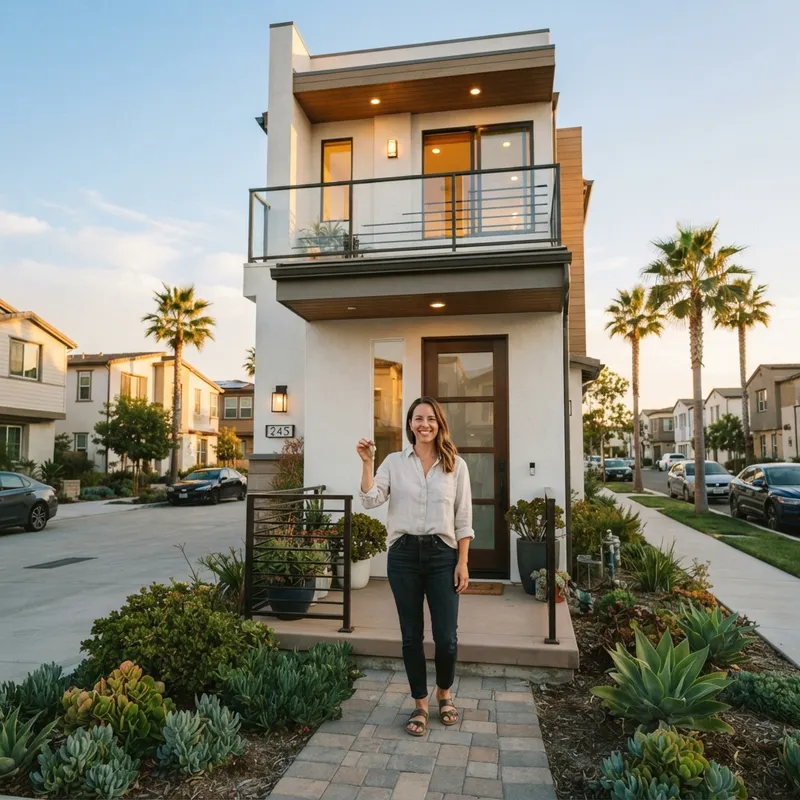
New construction rebates work inside a completely different ecosystem. The builder sets the base price, publishes the incentive package, and pays a co-op commission to any outside agent who registers a buyer on the first visit. That structure changes what a rebate is, where it comes from, and how much value it can unlock when combined with everything else the builder is willing to offer.
Stacking Rebates With Builder Incentives
The biggest difference is that new construction home incentives are not a substitute for a rebate, they are a companion to one. A builder in Irvine might be running a $25,000 closing cost credit and a 5.5% rate buydown on a specific inventory home. That package is set by the builder's finance team, and it does not shrink because you also have a buyer's agent. This is exactly where the builder incentives versus buyer rebates distinction matters most for California buyers.
Here is a side-by-side view of how the two rebate structures compare in practice.
Feature | Resale Rebate | New Construction Rebate |
|---|---|---|
Commission Source | Seller-paid, split with buyer's agent | Builder-paid co-op to buyer's agent |
Stackable Incentives | Rare, usually price or repair credits only | Rate buydowns, closing credits, design upgrades |
Price Flexibility | High, seller can move on price | Low base price, high incentive flexibility |
Disclosure at Closing | Shown as buyer credit on settlement statement | Shown as buyer credit, plus builder incentives |
Typical Rebate Size | Portion of buyer-side commission | Up to 1% of purchase price, e.g., $8,000 on an $800K home |
The takeaway is simple: a resale rebate is a single credit, while a new construction rebate sits on top of a broader incentive package that a knowledgeable agent can push further. That is the core of why a 1 percent real estate rebate on a new build often outperforms the same rebate on a resale purchase.
Why the Sales Office Is Not Your Ally
Walking into a builder's sales office alone feels efficient, but the sales rep behind the desk works for the builder. Their job is to protect the price sheet, meet quarterly sales goals, and steer buyers toward preferred lenders. New home buyer rebates do not exist in that conversation unless you bring your own representation to the table. A negotiating with home builders approach that includes a dedicated buyer's agent from day one, ideally registered on the first visit, is what unlocks the co-op commission that funds the rebate in the first place.

How to Maximize a Rebate on a California New Build
Getting the most out of a new construction rebate comes down to sequence, representation, and knowing which levers the builder will actually move. Buyers in Anaheim, Rancho Cucamonga, Chino, and Yorba Linda are seeing meaningful savings when they treat the rebate as one piece of a larger strategy rather than a standalone perk.
Register Your Agent on the First Visit
Nearly every builder requires that your buyer's agent accompany you or be registered on your very first visit to the community. Miss that step, and you forfeit the co-op commission that funds the rebate. Working with a firm like Ease, which specializes in new construction across Southern California, means the registration, timing, and incentive review are handled before you walk into a design center. The buyer rebate mechanics in California explicitly allow this credit to be applied at closing, so the value shows up on your settlement statement, not as a vague future promise.
Push on Incentives, Not Just Price
Builders rarely cut base prices because it affects comparable sales and appraisals in the community. What they will move on is incentives: extended rate locks, forward commitments, design center allowances, and non-recurring closing costs. A well-prepared buyer's agent knows which incentives are already published and which ones can be requested. This is the same logic behind the builder incentive stacking playbook that experienced new construction buyers use every quarter. Ease layers its 1% cash rebate on top of that stack, which is where the total savings often cross five figures. If you are weighing this against a resale purchase, our new construction versus resale comparison breaks down how those numbers typically shake out.
Conclusion
New construction rebates and resale rebates share a name, but they operate on completely different mechanics. Resale rebates are a single credit carved from a negotiated commission, while new construction rebates sit inside a bigger package of builder incentives, rate buydowns, and upgrade allowances that a dedicated buyer's agent can actually influence. For California buyers weighing whether representation is worth it on a brand new home, the math almost always favors bringing an advocate to the sales office. That is the model Ease is built around, and it is why so many first-time and move-up buyers in Southern California are rethinking how they approach the new build home buying process.
Ready to see how much you could get back on your next new construction purchase? Work with Ease to combine expert builder negotiation with a 1% cash rebate at closing.
Frequently Asked Questions (FAQs)
How to get a rebate on a new construction home?
Register a buyer's agent on your very first visit to the community, since builders require this to pay the co-op commission that funds your rebate at closing.
Can buyer rebates be applied to closing costs?
Yes, California buyer rebates are typically applied as a credit on the settlement statement and can go directly toward closing costs, prepaids, or reducing cash to close.
Are new construction rebates common for buyers?
They are increasingly common in California, especially through buyer-focused brokerages that specialize in new builds and register clients before they enter a builder's sales office.
What incentives do home builders typically offer?
Builders commonly offer rate buydowns, closing cost credits, extended rate locks, and design center allowances, most of which can be stacked with a buyer rebate.
Is a real estate rebate worth it for new builds?
Yes, because a new construction rebate can be paired with builder incentives, meaning the total savings often exceed what a resale rebate alone would deliver.
How does a real estate cash back rebate work at closing?
The rebate appears as a buyer credit on the closing disclosure and reduces the funds you need to bring to closing, up to 1% of the purchase price with Ease, capped at $30,000.
How can I save money on a new build in California?
Combine a dedicated buyer's agent, a 1% cash rebate, and negotiated builder incentives like rate buydowns and closing credits to maximize your total savings.
About the Author
Rachel Torres is a New Home Advisor at Ease with a background in Southern California real estate, specializing in new construction, builder incentives, and first-time homebuyer guidance. She writes to help buyers cut through builder jargon and understand the real financial picture behind a new build purchase across markets like Irvine, Anaheim, and Rancho Cucamonga.
