

 By Ryan Borden
Quick Answer
For buyers who need to move soon, quick move-in homes in Rancho Cucamonga, Chino, Ontario, and Eastvale can shorten the construction wait because the home is already built or nearing completion. The right city depends less on a universal “best deal” and more on the purchase price shown for a specific home, the monthly carrying costs, commute pattern, and whether the available floor plan meets their needs without major changes.
Introduction
Quick move-in homes give Inland Empire buyers a practical path to a newer home without waiting through a full build cycle. The key is to compare each community’s released inventory home on its total cost and readiness, not just the advertised base price. Regional resale context matters too: the Inland Empire median single-family price was $601,350 in February, and Riverside County’s median was $631,000, according to Inland Empire median price reporting. A finished inventory home can still carry community-specific taxes, association dues, and location tradeoffs that deserve a line-by-line review before you sign.
Key Takeaways:
Quick move-in homes reduce construction uncertainty because selections and schedules are largely set.
Ontario and Eastvale require close review of location-specific carrying costs and commuting needs.
Compare the final purchase worksheet, included finishes, and delivery date before choosing a city.

Quick Move-In Homes Across Inland Empire Cities
A quick move-in home is usually a builder-controlled residence with a completed or preselected design package, permitting progress, and a defined anticipated completion date. That structure helps buyers compare homes on tangible details instead of waiting to make every selection, but availability can change before a buyer reaches the contract stage. When exploring Inland Empire neighborhoods, focus on the commute, school, and lifestyle patterns that will still matter after the speed of closing fades.
What to verify before reserving an inventory home
Ask the builder for a written inventory sheet, the preliminary closing estimate, included features, and any conditions attached to incentives. For broader housing-market context, the Legislative Analyst's Office housing analysis can help buyers evaluate availability and pricing conditions alongside a builder's current release sheet. A fast timeline should never replace due diligence, especially when a home is near completion and buyers feel pressure to reserve it quickly. Buyers should also distinguish a genuine finished home from a future home site described as “available soon.”
Completion status: Confirm whether construction, inspections, and utilities are complete.
Included finishes: Request the actual appliance, flooring, and fixture schedule.
Sales price: Separate the home price from lender or incentive conditions.
Recurring costs: Review taxes, insurance, HOA dues, and special assessments.
Walk-through date: Schedule time to document unfinished or damaged items.
Why the advertised price is only a starting point
City-level price bands for new homes are not fixed, and current builder inventory changes too quickly to treat a published range as a promise. San Bernardino County’s median price was $510,000 in February, up 4% from February 2025, while Riverside County’s median was $631,000, down 2%, according to the same Inland Empire housing market coverage. Use those county figures as broad resale context, then obtain the exact release price and all recurring costs for the particular new home.
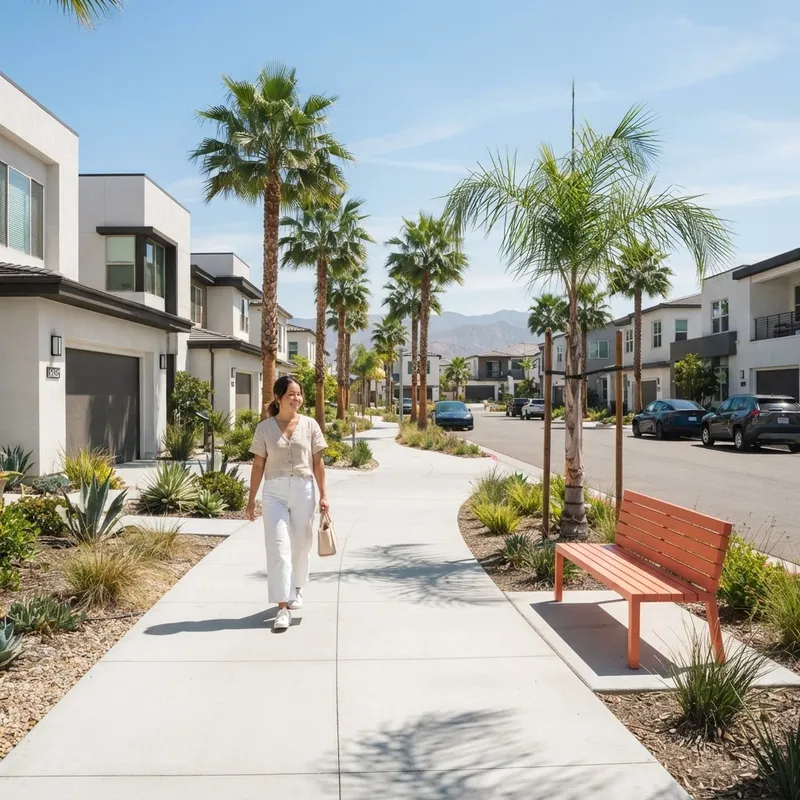
City-by-City Move-In Ready Homes Comparison
These four markets are not interchangeable. Rancho Cucamonga and Chino sit in San Bernardino County, while Ontario and Eastvale place buyers near different employment, airport, freeway, and Riverside County access patterns. The table is designed to help you decide where to spend your first serious touring weekend, while treating exact price and completion details as home-specific.
Rancho Cucamonga and Chino: established access versus planned growth
Rancho Cucamonga homes with quick move-in status commonly appeal to buyers who want a defined neighborhood setting and access to major transportation corridors. The tradeoff is that available new-build sites can be limited, so buyers may need to accept a predetermined plan, lot orientation, or finish package rather than waiting for a preferred release.
Chino new homes can give buyers more chances to compare planned-community inventory, but the commute should be tested at the times you actually travel. This is a better use of a quick visit than trying to generalize from city boundaries, because one neighborhood’s freeway approach can feel very different from another’s.
The comparison below keeps the decision centered on inventory mechanics and the principal tradeoff, rather than implying a citywide price that no current listing supports.
City | Quick move-in usually means | Entry-level price range | Main tradeoff to test |
|---|---|---|---|
Rancho Cucamonga | Completed or near-complete new home with chosen finishes | From $523,990; next available tier starts near $1.38M | Limited new-build locations and predetermined options |
Chino | Builder inventory within an active planned community | $499,900–$1,169,990 | Commute timing and route congestion |
Ontario | New community inventory near expanding regional access | $423,317–$799,990 | Community carrying costs and local activity |
Eastvale | Near-completion homes in a Riverside County setting | $535,990–$718,990; one luxury listing near $1.39M | Regional commute and lot-by-lot location differences |
These ranges reflect live community pricing, but current builder inventory changes quickly and the gap between entry-level and luxury releases can be wide within the same city. A buyer gains more clarity by comparing final worksheets for two or three actual homes than by relying on a broad figure that may not apply to the floor plan available this week.
Ontario and Eastvale: connectivity and Riverside County context
Ontario new homes are worth prioritizing when access to Ontario’s transportation network or nearby employment centers shapes your daily routine. The main tradeoff is total ownership cost: ask for the tax estimate, association details, and any special assessment disclosures before treating an incentive as the deciding savings.
Eastvale new homes can be compelling for buyers comparing Riverside County locations, but a quicker closing does not erase the need to drive the route to work, school, or family at realistic hours. California’s statewide existing-home median was $901,420 in August 2026, with a 30-year mortgage approaching 7%, according to California housing data, making a precise payment review especially important.
Conclusion
Start with Rancho Cucamonga if established location and transportation access lead your list, Chino if you want to compare active planned-community inventory, Ontario if regional connectivity is central, and Eastvale if Riverside County location fits your routine. Then narrow the shortlist using actual completion status, a full cost worksheet, and an in-person route test. Ease provides buyer-focused new home representation, negotiates with builders on the buyer’s behalf, and offers a 1% purchase-price cash rebate at closing, up to $30,000. That support can help buyers move quickly while still reviewing the terms that determine the real cost of a new home.
Ready to compare available homes with buyer representation? Connect with Ease to review your quick move-in options.
Frequently Asked Questions (FAQs)
What are the benefits of quick move-in homes?
Quick move-in homes reduce the waiting period for construction because the builder has already completed or selected many of the decisions, while buyers can inspect the specific home, confirm its included finishes, and work from a more defined completion schedule before committing.
How long does it take to close on a quick move-in home?
Closing on a quick move-in home depends on construction completion, inspections, loan underwriting, appraisal timing, and title work, so the builder should provide a written anticipated date rather than a verbal assurance that the home can close immediately.
Is it better to buy a new construction home or used?
Whether a new construction home or used home is better depends on your need for modern systems, location, timing, condition tolerance, and total ownership costs, because a newer home can reduce renovation needs while a resale home may offer a different neighborhood or move-in schedule.
What is included in a move-in ready home?
A move-in ready home usually includes the installed features listed in its purchase documents, such as the chosen flooring, appliances, fixtures, and landscaping status, so buyers should request the inventory specification sheet instead of assuming the model-home finishes are included.
How does Mello-Roos affect quick move-in home prices?
Mello-Roos affects quick move-in home affordability by adding a property-tax-related charge that can change the recurring payment, so buyers should review the preliminary tax information for the actual lot before comparing a new home’s price with another community.
About the Author
Ryan Borden is a New Home Advisor with experience in new construction, builder incentives, and the Southern California housing market. His work focuses on helping first-time and move-up buyers translate builder terminology into practical purchase decisions, especially when timing, financing, and final costs all need close attention.
