

 By Rachel Torres
Quick Answer
Mello-Roos is a special tax assessment attached to certain properties in California, most often newly built homes, that funds local infrastructure like schools, roads, parks, and emergency services. It appears as an extra line item on your property tax bill, typically adds a few hundred to a few thousand dollars per year, and usually lasts 20 to 40 years before expiring.
Introduction
Buyers touring a shiny new build in Irvine or Rancho Cucamonga often see a lower base price than expected, then notice a puzzling extra tax on the estimated payment sheet. That extra line is almost always Mello-Roos, and it can quietly add $150 to $400 to a monthly mortgage payment depending on the community. It exists because new neighborhoods need new schools, roads, water systems, and fire stations, and California cities push those costs onto the homes that benefit from them. Understanding what is Mello-Roos, how long it lasts, and how it fits into your total housing budget can be the difference between a comfortable purchase and a stretched one.
Key Takeaways:
Mello-Roos is a voter-approved special tax that funds infrastructure in newly developed California communities, added on top of your standard property tax.
Most Mello-Roos assessments last 20 to 40 years and range from $1,500 to $5,000+ annually depending on the district and home size.
Buyers can request the exact Mello-Roos amount and expiration date before signing a purchase agreement, and factor it directly into affordability calculations.

Understanding What Mello-Roos Is and Why It Exists
Mello-Roos originated with the Community Facilities Act of 1982, passed after Proposition 13 limited how much local governments could raise through traditional property taxes. Cities needed a new way to pay for the schools, sewers, and roads that growing communities demand, so they created Community Facilities Districts (CFDs) where property owners inside a defined boundary agree to fund those improvements directly. If you buy a new home inside a CFD, you inherit that obligation.
What Mello-Roos Actually Pays For
The money collected through a Mello-Roos fee goes toward specific, itemized public improvements listed when the district was formed. You can read the Community Facilities Districts framework to see the full legal scope, but here are the most common uses in Southern California:
Public schools: New elementary, middle, and high schools serving the community.
Roads and transit: Widened streets, signals, sidewalks, and interchange improvements.
Public safety: Fire stations, police substations, and emergency response infrastructure.
Parks and open space: Community parks, trails, sports fields, and landscaping.
Utilities: Water lines, storm drains, and sewer expansions serving the district.
Mello-Roos vs. Standard Property Tax
Your standard California property tax is capped at roughly 1% of assessed value under Proposition 13, but Mello-Roos sits on top of that as a separate special assessment. It is technically a tax, but it functions more like a bond repayment tied to the specific district. That distinction matters when you compare Mello-Roos vs standard property tax on your monthly budget and when you look at the property taxes on new homes that show up on your first escrow statement.
Here is how the two compare side by side:
Feature | Standard Property Tax | Mello-Roos Special Tax |
|---|---|---|
Rate | ~1% of assessed value | Flat amount or formula per parcel |
Duration | Permanent while you own | 20 to 40 years, then expires |
Adjusts with home value | Yes, capped at 2% yearly | No, set by district formula |
Applies to resale homes | Always | Only if inside a CFD |
Funds general services | Yes | No, only district-specific projects |
The biggest tradeoff is duration. Standard property tax follows you as long as you own, while Mello-Roos eventually sunsets, but during those decades it can meaningfully change your affordability picture.
How Mello-Roos Affects Your Purchase and What to Check Before Signing
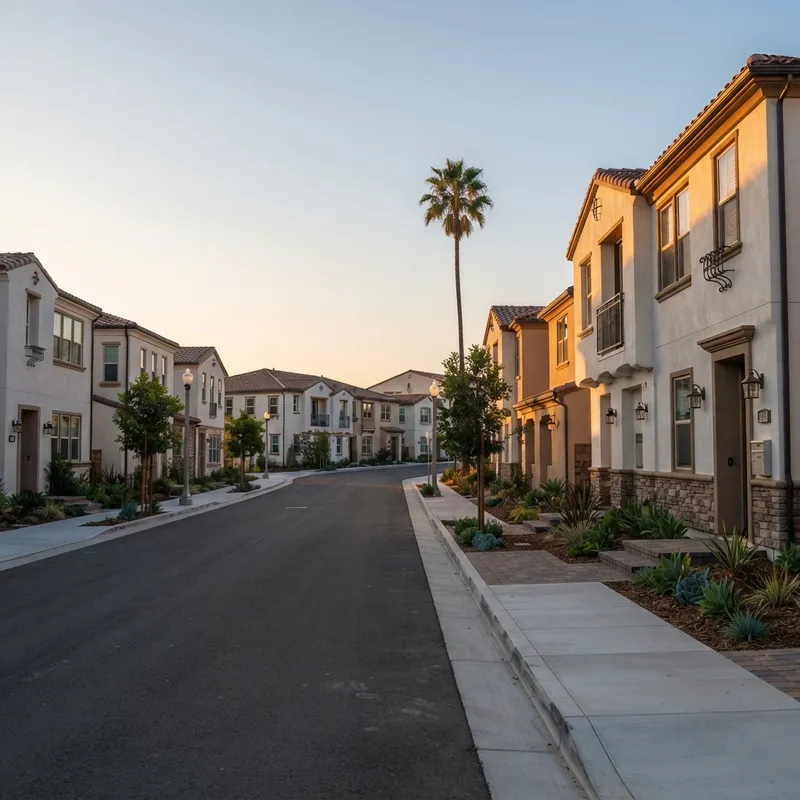
Mello-Roos is most common in fast-growing areas like Irvine, Chino, Eastvale, Ontario, and parts of Rancho Cucamonga, where entire master-planned communities were built on land that needed brand new infrastructure. Resale homes in older neighborhoods rarely carry it, which is one reason a comparable resale down the street can look cheaper on paper even at a higher list price. This is one of the biggest hidden costs in new construction that first-time buyers miss when they compare a builder's community to a resale option.
Calculating Mello-Roos Costs on a Specific Home
Every property in a CFD has a specific assessment amount, and California law requires the seller (including a builder) to disclose it in writing. You can also verify it independently through the county. The Orange County Treasurer's Mello-Roos portal lets you search by address to see the current assessment, the bond maturity date, and how the amount is calculated. Some districts use a flat rate per home, others tier the amount by square footage or lot size, and most include a small annual escalator of 2% or less.
For a rough calculation, take the annual Mello-Roos amount, divide by 12, and add it to your monthly PITI. A $3,600 annual assessment adds $300 to your monthly payment, which can shift your qualifying loan amount by tens of thousands of dollars. Buyers should also ask whether the assessment is paid through impound with the mortgage or billed separately, since that affects cash flow planning and works alongside other HOA fees and assessments in the community.
Questions to Ask Before You Sign
Before you commit to a home in a CFD, get the specifics in writing from the builder and cross-check them with the county. Understanding the full picture of community infrastructure development in your target neighborhood helps you weigh whether the assessment reflects real value or just growth premium.
Exact annual amount: The current year's total, including any HOA or landscape district add-ons.
Expiration year: The final year the tax will appear on your bill.
Annual escalator: Whether the amount grows and by how much per year.
Payoff option: Some CFDs allow buyers to prepay the bond, though it is rarely cost-effective.
What it funds: Schools and roads generally hold their value better than amenity-heavy districts.

Conclusion
Mello-Roos is not a reason to avoid new construction, but it is a reason to walk in with clear eyes and real numbers. The tax funds the schools, roads, and services that make growing Southern California communities livable, and it eventually expires, but during ownership it directly shapes your monthly payment and your qualifying power. Before you sign, get the exact annual amount, the expiration date, and the escalator in writing, then factor it into your affordability model alongside your mortgage, insurance, and HOA. When you work with Ease as your buyer's advocate on a new construction purchase, we help you decode these assessments, negotiate builder incentives that offset the cost, and return 1% of the purchase price at closing to help absorb the impact. A well-informed buyer never gets blindsided by a special tax district. You can review our full closing costs guide to see how the rebate can be applied at signing.
Thinking about a new build in a Mello-Roos community? Talk to Ease before you sign with the builder to understand the true cost and unlock a 1% rebate at closing.
Frequently Asked Questions (FAQs)
What is a Mello-Roos tax in California?
It is a special property tax assessment on homes inside a Community Facilities District that funds local infrastructure like schools, roads, and public safety in newly developed areas.
How does Mello-Roos affect my mortgage payment?
The annual amount is usually collected through your impound account and divided across 12 months, adding roughly $150 to $400 to your monthly payment depending on the district.
Why do new construction homes have Mello-Roos?
New communities need brand new schools, roads, and utilities, and cities use Mello-Roos to make the homes benefiting from that infrastructure pay for it directly rather than raising general taxes.
Is Mello-Roos tax deductible?
Portions used for services rather than capital improvements are generally not deductible on federal taxes, so buyers should consult a CPA to determine what applies to their specific district.
How long do Mello-Roos taxes last?
Most Mello-Roos assessments run for 20 to 40 years from the date the district was formed, tied to the maturity of the bonds being repaid.
How do I find out if a house has a Mello-Roos tax?
Check the county treasurer's website by parcel number, review the seller's required disclosure package, or ask your buyer's agent to pull the current tax bill for the property.
Is it worth buying in a Mello-Roos district?
It often is, since these communities tend to offer newer schools, better amenities, and modern infrastructure, but only if the total monthly cost still fits comfortably in your budget.
About the Author
Rachel Torres is a New Home Advisor at Ease with a background in Southern California real estate, specializing in new construction, builder incentives, and first-time buyer education. She helps clients across Irvine, Rancho Cucamonga, Chino, and beyond navigate builder contracts, tax assessments, and negotiation strategy with clarity and confidence.
