
 By Marcus Webb
Quick Answer
The best neighborhoods in Southern California are the ones that match your daily routine, long-term budget, and resale priorities, not simply the ones with the newest homes or most amenities. Compare schools, commuting patterns, taxes, HOA obligations, development plans, and builder quality before falling in love with a model home.
Introduction
Buyers searching for the best neighborhoods in Southern California should evaluate the area before evaluating the kitchen layout. A home can be upgraded later, but a long commute, unclear HOA rules, or a poorly planned surrounding development can affect ownership for years. This matters especially in active new-home markets such as Irvine, Chino, Rancho Cucamonga, and Mission Viejo, where neighboring communities can create very different costs and lifestyles. The strongest choice balances how the neighborhood works today with what may change around it.
Key Takeaways:
Choose a neighborhood based on daily use, total carrying costs, and future buyer demand.
Visit at different times to assess traffic, noise, parking, and community activity.
Review HOA documents, tax obligations, and planned construction before signing a contract.

Evaluate the Neighborhood Before the House
A practical neighborhood decision begins with the life you will actually live there. Map weekday destinations, test the route at realistic hours, and consider whether parks, groceries, medical care, outdoor space, and gathering places are convenient enough to support your routine. The best places to live in Southern California are rarely defined by a single feature, because convenience, community character, and ownership costs interact every day.
Use a Daily-Life Scorecard
Create your own standards before touring communities so a polished sales center does not set the agenda. A thoughtful new home community selection process separates essential requirements from preferences and keeps each tour comparable.
Commute: Drive key routes during the hours you expect to use them.
Schools: Review school performance data alongside campus visits and district boundaries.
Safety: Check local crime statistics, then walk the area during daytime and evening hours.
Convenience: Note practical destinations, not only future retail shown on a site plan.
Fit: Pay attention to sidewalk use, parking pressure, street activity, and the pace of the community.
Look Beyond School Ratings
School quality can influence both family decisions and future resale demand, but a rating alone does not explain the full picture. Review enrollment, accountability information, and district context through education data resources, then confirm which schools serve the specific address because boundaries can differ within the same city. Buyers considering family friendly neighborhoods in Orange County should also ask whether nearby campuses have room to absorb planned growth.
Compare Master-Planned and Standalone Communities
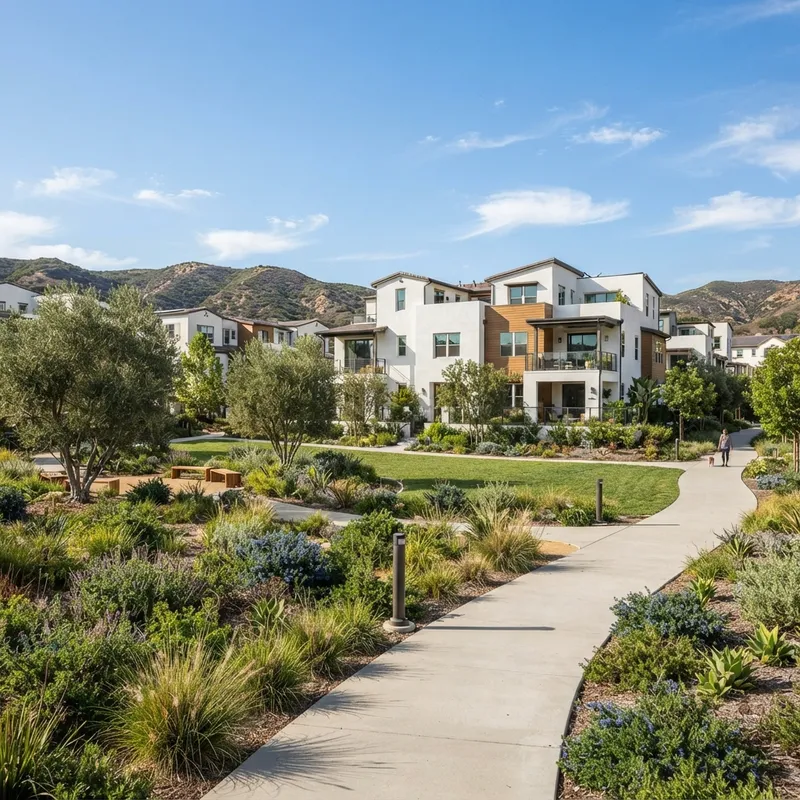
Master-planned communities and smaller standalone developments can both work well, but they offer different ownership experiences. A larger plan may bring coordinated amenities and trails, while a smaller project may feel more established or provide a simpler operating structure. Buyers researching the best master planned communities in Inland Empire should compare the complete cost structure and not treat amenities as free benefits.
Match the Development Type to Your Priorities
A master-planned setting may suit buyers who value shared recreation, connected streets, and a defined community identity. A standalone project may better suit buyers who prefer fewer layers of governance, less nearby construction, or a location embedded in an existing neighborhood. This master-planned community comparison is most useful when it accounts for the stage of development, because living near future phases can mean both future amenities and ongoing activity.
The table below helps distinguish the tradeoffs that deserve attention during an onsite visit and document review.
Decision factor | Master-planned community | Standalone development |
|---|---|---|
Amenities | Often coordinated across the broader plan | May be limited or rely on city facilities |
Future construction | More likely across later phases | May be more contained after completion |
HOA structure | Can include layered associations | May have a simpler association structure |
Community character | Designed around a unified plan | More closely tied to the existing area |
Resale appeal | Depends on upkeep and amenity relevance | Depends on location and neighborhood maturity |
The better choice is the one whose obligations and environment you would still welcome after the novelty of a new home has faded.
Budget for Costs That Do Not Appear in the Base Price
Ask for every recurring cost in writing, including association dues, special district assessments, insurance considerations, and utility arrangements. An HOA fee breakdown should identify what each association maintains, whether additional associations apply, and how rules affect rentals, exterior changes, parking, and pets. Separate property tax considerations from the builder's advertised payment estimate so the monthly budget reflects the actual property.
Research Growth, Builders, and Resale Resilience
Future development can support convenience and buyer demand, but it can also change traffic, views, school capacity, and construction noise. Look at city planning materials, vacant parcels, road projects, and commercial plans around the neighborhood rather than assuming the current surroundings will remain unchanged. Communities with high appreciation potential SoCal buyers seek are usually supported by durable location fundamentals, not a promise of fast price growth.
Investigate the Builder and the Immediate Area
Builder reputation matters because construction quality, warranty responsiveness, and finish consistency affect the ownership experience. Review completed neighborhoods by the same builder, speak with residents when appropriate, and inspect how common areas and streets have aged. In areas with up and coming neighborhoods in Rancho Cucamonga, distinguish between a completed amenity and a proposed feature by asking what is funded, approved, and scheduled.
For Orange County comparisons, Irvine versus Tustin illustrates why city-level labels are only a starting point: access, housing types, school assignments, and development patterns can differ substantially within a short drive. Ease helps buyers assess new construction communities from the buyer side, including builder timelines, incentives, upgrade choices, and the financial implications of each location.
Stress-Test Resale Before You Buy
Imagine selling the property to a buyer with different needs than yours. A home with awkward access, persistent road noise, limited guest parking, or an unusually high recurring cost may attract a narrower pool even if the interior is attractive. The best new construction neighborhoods tend to pair a sound location with practical layouts, maintained public spaces, and a clear story for the next buyer.
Conclusion
Choose a neighborhood by testing how it functions, reviewing its full cost structure, and examining what is planned beyond the sales office. Compare master-planned and standalone options based on your tolerance for rules, amenities, future construction, and recurring expenses. Bring a consistent scorecard to every visit, and confirm assumptions through documents and real-world observation. With buyer-focused guidance from Ease, new-home buyers can evaluate a community with more clarity before committing to a builder contract.
Ready to compare communities with buyer-first support? Connect with Ease for help evaluating your new-home options.
Frequently Asked Questions (FAQs)
What are the best neighborhoods to buy a new construction home in SoCal?
The best neighborhoods to buy a new construction home in SoCal are those that combine a workable commute, reliable everyday services, understandable ownership costs, and resale-friendly location factors, because a new home’s finishes cannot offset a neighborhood that becomes difficult to use or expensive to maintain.
How to choose the right neighborhood for a new home purchase?
Choosing the right neighborhood for a new home purchase means ranking non-negotiables before touring, then verifying each community through repeat visits, written cost disclosures, school boundary confirmation, and review of surrounding development plans instead of relying on model-home impressions.
Which Southern California cities have the best new housing developments?
Southern California cities with strong new housing development options include markets such as Irvine, Anaheim, Rancho Cucamonga, Chino, Yorba Linda, and Mission Viejo, but the right city depends on the specific community’s access, local obligations, builder, and fit with your daily needs.
What should I look for when researching new home neighborhoods?
When researching new home neighborhoods, look for confirmed school assignments, traffic conditions, HOA rules, tax and assessment disclosures, nearby land-use plans, builder track record, parking realities, and the distance to services you expect to use regularly.
Are new construction homes a good investment in SoCal?
New construction homes can be a good investment in SoCal when the purchase price, financing terms, recurring costs, and location support long-term ownership, while the most reliable approach is to avoid treating projected appreciation or builder marketing as a guarantee of future value.
Is it better to buy in a master-planned community or a custom neighborhood?
Buying in a master-planned community is better for buyers who value coordinated amenities and a unified setting, while a standalone neighborhood may suit buyers seeking a more established environment, fewer governance layers, or less exposure to future construction phases.
About the Author
Marcus Webb is a Real Estate Strategist focused on helping Southern California buyers evaluate new-build opportunities across Orange County, Riverside, and San Bernardino. His work emphasizes buyer representation, builder negotiations, rate buydowns, upgrade strategy, and the total financial picture behind a new construction purchase.
