

 By Marcus Webb
Introduction
A down payment calculator for a new construction home should do more than multiply the purchase price by a percentage. To get an accurate cash-to-close number in Southern California, you need to layer in builder incentives, closing costs, and buyer rebates that a generic calculator will not surface. Buyers in Irvine, Chino, and Rancho Cucamonga routinely find their true out-of-pocket cost is thousands lower than the sticker math suggests, once these variables are counted. This guide walks through the exact steps, with real numbers, so the figure you bring to the builder's sales office is the one that actually reflects your finances.
Key Takeaways:
A useful down payment calculator for new builds must factor in builder incentives, closing costs, and buyer rebates, not just a percentage of the purchase price.
On a $750,000 Southern California new build, the difference between 3% and 20% down changes your monthly payment by roughly $1,000 and your cash-to-close by over $125,000.
A 1% buyer rebate on a $750,000 home returns $7,500 at closing, which can offset closing costs or reduce your effective down payment.

Building an Accurate Down Payment Estimate
A down payment calculator gives you a starting number, but a new construction purchase involves moving parts that standard tools ignore. Base price, lot premium, upgrades, closing costs, and incentives all shift the equation before you sign anything. Getting the math right early is what separates buyers who feel prepared from those who get surprised at the signing table.
The Core Inputs You Need First
Before you touch a mortgage down payment calculator, gather the numbers that actually drive the output. A house loan down payment calculator only returns useful figures when the inputs reflect the full purchase, not just the base price advertised on the builder's website. For a new construction home in Southern California, the typical inputs look like this:
Total purchase price: Base price plus lot premium plus any structural upgrades locked in before contract.
Down payment percentage: Usually 3% to 20% depending on loan type, credit profile, and cash reserves.
Estimated closing costs: Roughly 2% to 4% of the purchase price in California, covering escrow, title, lender fees, and prepaids.
Builder incentives: Rate buydowns, closing cost credits, or upgrade allowances the builder is offering that quarter.
Buyer rebate: Any cash back at closing from your buyer's agent, which can be applied to closing costs directly.
Once those five inputs are in front of you, a buyer rebate down payment guide becomes far more useful because you can model actual scenarios rather than guesses. Skip any one of these and the calculator output is fiction.
Running the 3% vs 20% Scenario on a $750K New Build
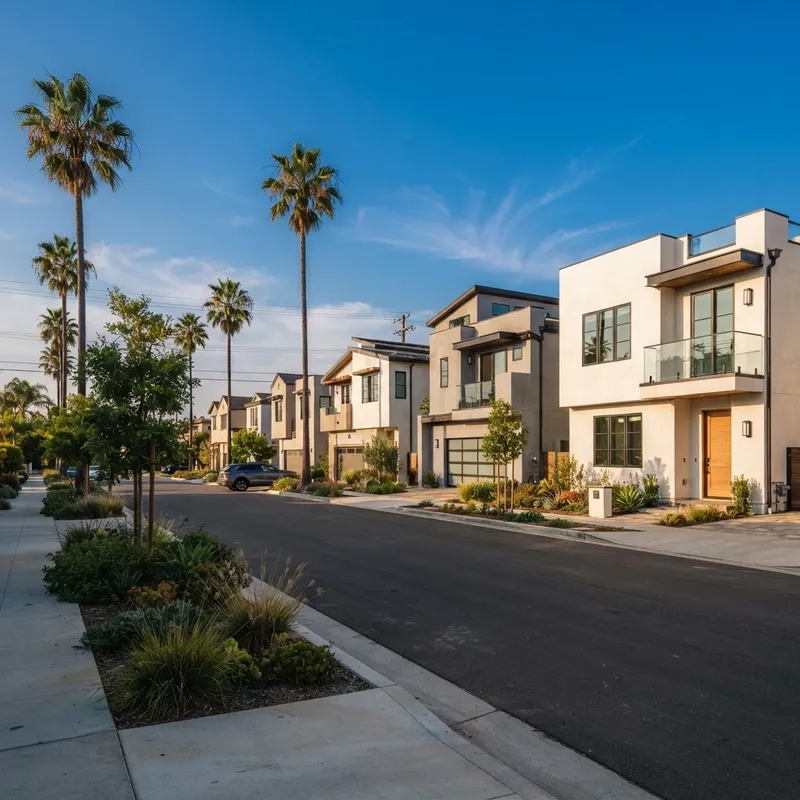
The clearest way to see how these inputs interact is to run two scenarios side by side on a home priced at $750,000, which reflects entry-level new construction in markets like Chino and Rancho Cucamonga. National data from average down payment amounts shows most first-time buyers put down far less than 20%, so both scenarios are realistic. The table below breaks down what each option looks like in practice.
Line Item | 3% Down | 20% Down |
|---|---|---|
Purchase Price | $750,000 | $750,000 |
Down Payment | $22,500 | $150,000 |
Estimated Closing Costs (3%) | $22,500 | $22,500 |
Builder Incentive Credit | -$10,000 | -$10,000 |
1% Buyer Rebate | -$7,500 | -$7,500 |
Cash Needed at Close | $27,500 | $155,000 |
Estimated Monthly Payment (P&I, 6.5%) | $4,597 | $3,792 |
The 3% down path preserves cash for reserves, furnishings, and upgrades, but adds PMI and a higher monthly payment. The 20% path frees you from PMI and lowers monthly cost, but ties up $127,500 in additional equity that could otherwise sit in reserves or investments. Neither is universally better; the right answer depends on your reserves, timeline, and comfort with monthly obligation. For a deeper breakdown, review closing costs and their calculation before finalizing which scenario fits.
Southern California Adjustments That Change the Numbers
Regional factors shift what a new construction purchase cost estimator should output in Southern California specifically. Builder incentive structures, assistance programs, and rebate opportunities all behave differently here than they do nationally. Failing to account for them is the single biggest reason buyers overshoot their down payment target.
How Builder Incentives and Rebates Reshape Your Down Payment
Builder incentives in Orange County, Riverside, and San Bernardino counties are often more flexible than posted materials suggest, particularly on standing inventory or homes nearing quarter-end close-out. Analysis from builder incentive tradeoffs shows that closing cost credits and rate buydowns typically deliver more real value than upgrade packages, though builders prefer to steer buyers toward upgrades because those cost them less. When you factor a $10,000 to $25,000 closing cost credit into your calculator, cash needed at close drops meaningfully.
Layering a buyer rebate on top compounds the effect. Ease returns 1% of the purchase price to the buyer at closing, up to $30,000, and that rebate can be applied directly to closing costs to shrink the cash-to-close figure. On a $750,000 home, that is $7,500 that lands on the buyer's side of the settlement statement rather than staying in the transaction. Combined with strong builder incentives negotiation, buyers routinely reduce out-of-pocket costs by $15,000 to $40,000 on a mid-priced new build.
Assistance Programs and Loan Type Interactions
California down payment assistance programs can further reduce the cash requirement for eligible buyers. Programs like CalHFA, GSFA Platinum, and various city-level initiatives detailed in this overview of California assistance programs offer forgivable or deferred loans that can be layered with conventional or FHA financing. Income limits and property price caps vary by program, so eligibility should be verified before you rely on them in your calculator inputs. Buyers who qualify often close on new construction with less than $15,000 of their own cash on a $600,000 to $700,000 home. Explore first-time buyer programs available in your specific city to see which stack works.

Conclusion
A down payment calculator is only as accurate as the inputs you feed it, and for new construction in Southern California, those inputs must include builder incentives, closing cost credits, and buyer rebates. Run the 3% and 20% scenarios side by side, layer in the credits you can realistically negotiate, and subtract any rebate you qualify for to land on a true cash-to-close figure. Buyers who work with Ease start with more accurate numbers because the 1% rebate and negotiated incentives are baked into the plan from day one, not discovered at closing. Take the time to build the estimate before your first sales office visit so the conversation focuses on the home, not the math. That preparation is what turns a stressful purchase into a confident one.
Ready to see what your real cash-to-close number looks like on a Southern California new build? Work with Ease to combine expert negotiation with a 1% buyer rebate that goes straight toward your closing costs.
Frequently Asked Questions (FAQs)
How much down payment do I need for a new house?
Most new construction buyers put down between 3% and 20%, with the median first-time buyer landing around 8% depending on loan type and cash reserves.
What is the minimum down payment for new construction in California?
Conventional loans allow as little as 3% down and FHA loans allow 3.5%, though builder-preferred lenders sometimes offer 0% down programs tied to specific incentives.
Can I apply builder incentives to my down payment?
Builder incentives are typically applied to closing costs or rate buydowns rather than the down payment itself, though the net effect still reduces your total cash needed at close.
How does a down payment affect my new construction mortgage?
A larger down payment lowers your loan amount, monthly payment, and total interest paid, and eliminates private mortgage insurance once you reach 20% equity.
Can I use my 1% rebate toward my down payment?
The 1% buyer rebate is credited at closing and applied to closing costs or cash-to-close, which effectively reduces the total cash you bring to the table.
How much cash do I need to close on a new construction home?
Plan for your down payment plus 2% to 4% of the purchase price in closing costs, minus any builder credits and buyer rebates you have secured.
Am I eligible for down payment assistance in Southern California?
Eligibility depends on income, property price, and first-time buyer status, with programs like CalHFA and GSFA Platinum serving buyers across Orange, Riverside, and San Bernardino counties.
