

 By Rachel Torres
Quick Answer
A new construction punch list is your written record of every defect, unfinished item, and quality issue you spot during the final walkthrough, submitted to the builder for repair before closing. Southern California buyers should walk each room with painter's tape, a flashlight, and a printed checklist, then insist all items are resolved in writing before signing.
Introduction
The final walkthrough is the single most important hour of your new construction purchase, and most buyers spend it nodding along with the builder's sales rep instead of hunting for problems. That rep works for the builder, not for you, which means every scuffed cabinet, missing outlet cover, or crooked tile that goes unflagged becomes your problem after closing. A punch list for a new house is how you flip that dynamic, turning a rushed tour into a documented list the builder is contractually obligated to address. Done well, it protects tens of thousands of dollars in workmanship. Done poorly, you inherit someone else's shortcuts on day one.
Key Takeaways:
A punch list is a written, buyer-controlled record of every defect and incomplete item found during the final walkthrough, not a courtesy list from the builder.
Room-by-room inspection with painter's tape, a checklist, and ideally a third-party inspector catches issues the builder's rep will not volunteer.
Buyer representation, timing, and documentation determine whether repairs happen before closing or drag on for months afterward.

What a New Construction Punch List Actually Is
A punch list is the running document of unfinished work and defects identified during the walkthrough phase, typically scheduled one to two weeks before closing when the home is roughly 99% complete. The builder has their own internal list, but yours is separate, and it is the one that protects your interests as the buyer.
Why Your List Matters More Than the Builder's
The builder's superintendent walks the home to catch anything that would embarrass the company. You walk it to catch anything that would cost you money, time, or comfort after move-in. Those are not the same list, which is why a buyer-led final walkthrough checklist is the foundation of a smooth closing.
Cosmetic defects: paint drips, drywall dings, scratched countertops, chipped tile, cabinet misalignment.
Functional failures: outlets that do not power on, HVAC vents blowing the wrong direction, garage door sensors misaligned, dishwasher not draining.
Missing items: upgrades you paid for but were not installed, missing switch plates, absent smoke detectors, incomplete landscaping.
Code and safety issues: exposed wiring, improper railing heights, missing GFCI outlets in wet areas, ventilation gaps.
Warranty-triggering defects: water intrusion, foundation cracks, roof anomalies, plumbing leaks, per California construction defect guidance.
Punch List vs. Home Inspection vs. City Inspection
Buyers often confuse three different quality checks that happen at different stages, and assuming one covers the others is how problems slip through. City inspectors verify code compliance, not workmanship. A third-party home inspector performs a technical evaluation. Your punch list captures what you personally see and expect. All three serve different purposes, and skipping any of them leaves gaps in your protection.
Check Type | Who Performs It | What It Covers | Cost to Buyer |
|---|---|---|---|
City Inspection | Municipal inspector | Code compliance only | Included in permits |
Builder Walkthrough | Builder rep + buyer | Cosmetic and functional items | Free |
Third-Party Inspection | Licensed private inspector | Systems, structure, workmanship | $400 to $800 |
Buyer Punch List | Buyer (with agent) | Everything the buyer flags | Free |
The city sign-off does not guarantee your home is defect-free, and the builder walkthrough is not a substitute for an independent new home inspection. Layering all four is how you close with confidence.
Room-by-Room: What to Check on Your Walkthrough
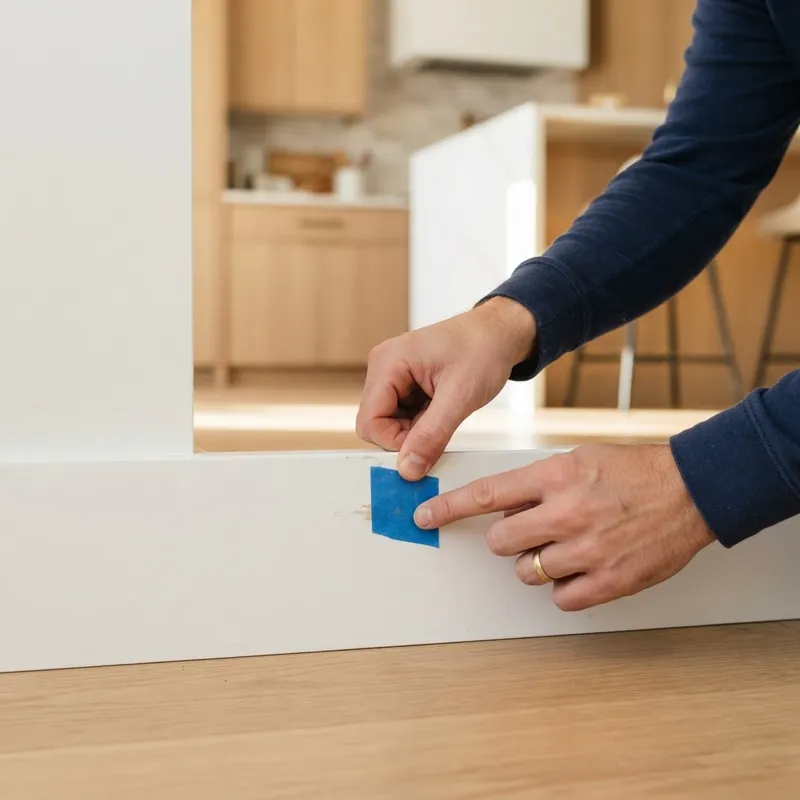
Bring painter's tape in a bright color, a printed checklist, a phone charger to test outlets, a flashlight, and a level if you own one. Tape every defect so the builder's team can see exactly what you flagged, then photograph each tagged item with a note about the issue.
Exterior, Kitchen, and Living Areas
Start outside and work in, following a walkthrough inspection checklist so you do not miss zones once you get distracted by the interior finishes. Check siding, stucco, and paint for cracks or uneven coverage. Test the garage door opener, sensors, and remote. Inside, run every kitchen appliance through a real cycle. Open and close every cabinet and drawer twice. Look under sinks with your flashlight for staining, water lines, or loose fittings. Turn on every faucet, check hot and cold sides, and watch for slow drains. Common defects in new construction homes cluster in these high-touch areas because they involve the most trades handing off work to each other.
Bedrooms, Bathrooms, and Systems
In bedrooms, test every window for smooth operation and proper locking, check closet shelving, and confirm blinds or shades match the contract. In bathrooms, run showers for at least three minutes to check drainage and water temperature stability, then flush every toilet twice. For systems, cycle the HVAC through heating and cooling, listen for unusual sounds, and confirm every vent is delivering airflow. Look at the electrical panel for proper labeling. The California consumer affairs guidance highlights water intrusion and foundation issues as the most costly defects to miss, so pay close attention to ceilings under bathrooms, corners of window frames, and any hairline cracks around the foundation.
Conclusion
Your punch list is only as strong as the documentation, timing, and representation behind it. Submit every item in writing, get signed acknowledgment from the builder before closing, and confirm repair timelines in the contract addendum rather than accepting a verbal promise. Buyers working with Ease in Anaheim, Irvine, and Rancho Cucamonga routinely catch more items because a buyer-advocate agent knows exactly where builders cut corners and how to push back. The walkthrough is your last leverage point, so treat it like the negotiation it is. A prepared buyer closes on a finished home, not a project.
Ready to walk your new build with a true buyer advocate at your side? Partner with Ease to get expert representation, sharper punch list documentation, and 1% cash back at closing.
Frequently Asked Questions (FAQs)
What is a punch list in real estate?
A punch list is a written record of defects, incomplete work, and quality issues identified during the final walkthrough that the builder must address before or shortly after closing.
How do you create a punch list for a new house?
Walk the home room by room with painter's tape and a checklist, mark every defect, photograph each item, and submit the full list in writing to the builder before closing.
How long does a builder have to fix punch list items?
Most Southern California builders commit to resolving punch list items within 30 to 60 days of closing, though many buyers negotiate to have priority items completed before signing.
What should I include on my new construction punch list?
Include cosmetic defects, functional failures, missing upgrades you paid for, safety and code concerns, and any warranty-triggering issues like water intrusion or foundation cracks.
What happens if the builder refuses to fix punch list items?
You can escalate through the builder's warranty department, file a complaint with the California Contractors State License Board, and lean on your buyer's agent to negotiate a credit or delay closing until items are resolved.
Is a final walkthrough mandatory for new builds?
The walkthrough is not legally mandatory but is standard practice, and skipping it is one of the fastest ways to lose leverage and inherit unresolved defects, as explained in punch list timing guidance for new home buyers.
Should I hire a private inspector for a new construction home?
Yes, hiring a licensed third-party inspector is highly recommended because they catch systems and workmanship issues that city inspections and builder walkthroughs routinely miss.
About the Author
Rachel Torres is a New Home Advisor at Ease with a background in Southern California real estate, specializing in new construction, builder incentives, and first-time buyer representation. She writes for buyers navigating new builds for the first time, translating builder jargon into plain language and helping clients across Orange County and the Inland Empire close with confidence. Her work focuses on giving buyers the tools and advocacy they need at every stage, including understanding builder registration rules and negotiation leverage.
