
 By Rachel Torres
Introduction
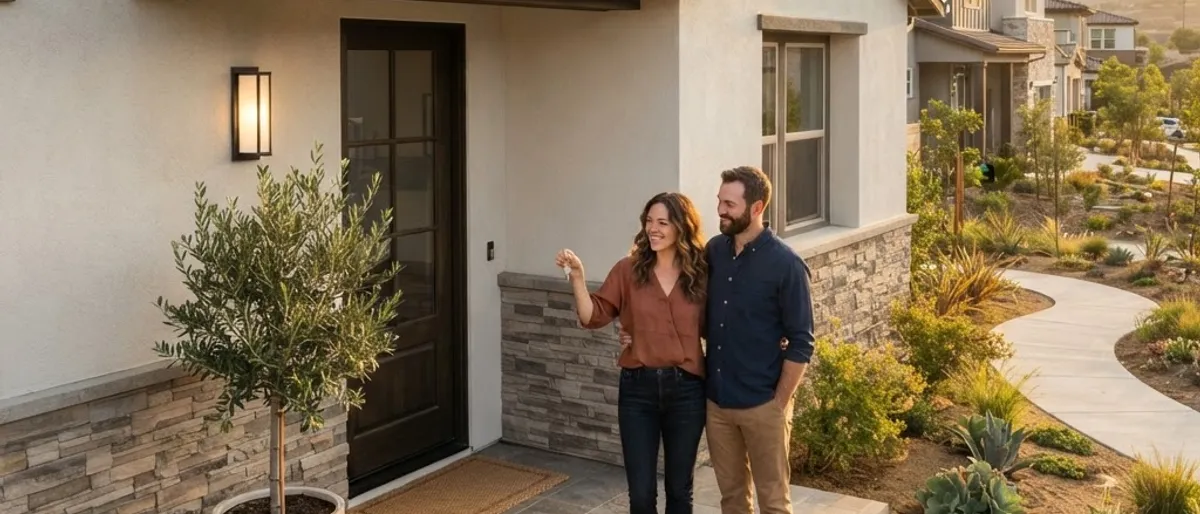
New construction homes are outpacing resale properties for appreciation in several Southern California growth corridors right now, but the picture flips in mature, land-constrained cities like coastal Irvine and parts of Anaheim. The right answer depends less on the "new vs. used" debate and more on which submarket you buy in, how the surrounding area is developing, and what incentives you negotiate at signing. Buyers who assume older neighborhoods automatically appreciate faster are often surprised when a well-planned new community pulls ahead within five years. Growth corridors in the Inland Empire, in particular, are rewriting that assumption in 2026.
Key Takeaways:
New construction communities in growth corridors like Chino and Rancho Cucamonga are appreciating faster than nearby resale stock in 2026.
Resale homes tend to hold an edge in supply-constrained coastal cities where land is scarce and demand remains steady.
Builder incentives, rebates, and negotiated upgrades can shift the ROI equation more than headline price differences suggest.
What Actually Drives Home Value Growth in SoCal
Home appreciation is not one force. It is the product of local supply, buyer demand, neighborhood trajectory, home condition, and financing conditions all pulling on price at the same time. In Southern California, those variables look very different from Irvine to Rancho Cucamonga, which is why the new construction vs resale homes debate rarely has one right answer.
The Growth Corridor Effect
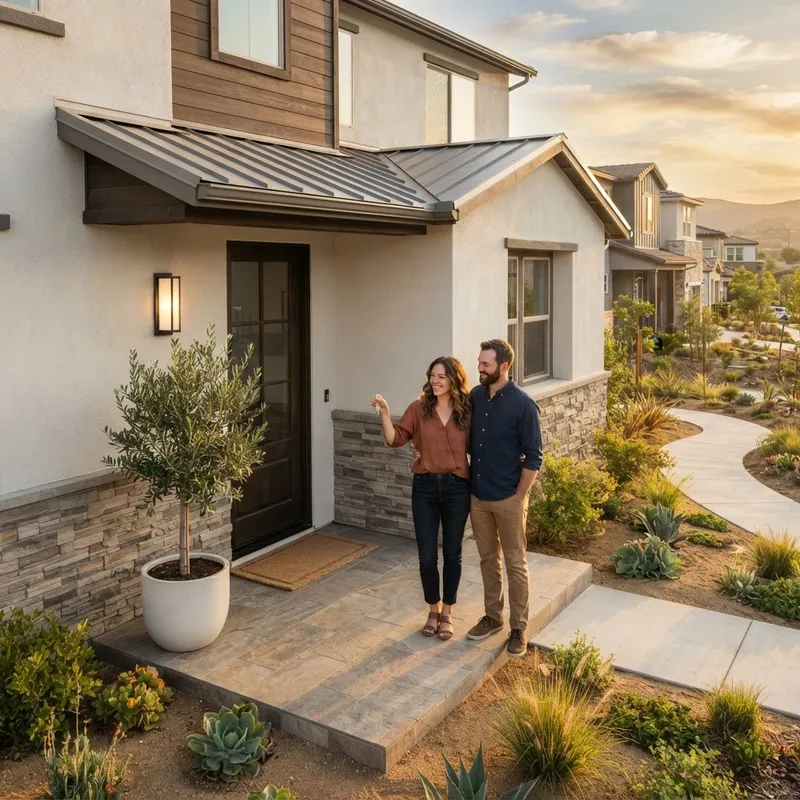
New construction communities usually appear where cities are still building out infrastructure, schools, and retail. That means buyers are purchasing into a neighborhood that is still forming, and the surrounding investment often lifts values faster than in already-built areas. Research on market-rate development impacts shows that new housing supply tends to strengthen, not weaken, nearby property values over time.
Infrastructure investment: New roads, parks, and schools raise the ceiling on nearby home values.
Retail and job growth: Corridor cities like Chino and Rancho Cucamonga are attracting employers, which pulls in more buyers.
Master-planned amenities: Pools, trails, and community centers create long-term desirability that resale tracts often lack.
Newer housing stock: Buyers pay a premium for energy efficiency, modern layouts, and lower maintenance risk.
Where Resale Still Wins
Established cities with limited buildable land tend to favor resale appreciation because scarcity does the heavy lifting. Coastal Orange County, older Irvine villages, and pockets of Anaheim near tourism and job hubs continue to see steady demand against a fixed supply. In those markets, a well-maintained resale home in a mature neighborhood often appreciates more predictably than a new build in a distant tract. Understanding broader real estate market trends across the region helps buyers see where scarcity ends and growth-corridor upside begins.
City-by-City: Where Each Path Has the Edge in 2026
Southern California is not one market. It is dozens of micro-markets with different appreciation stories, and the smart move is to compare a specific city rather than the region as a whole.
Comparing SoCal Submarkets Side by Side
The table below summarizes how new construction and resale are performing across priority SoCal cities in 2026. Use it as a starting point, then dig into the specific community you are considering.
City | Stronger Path in 2026 | Why | Watch-Out |
|---|---|---|---|
Irvine | Mixed | New villages appreciate well; established resale is scarcity-driven | Premium pricing on both sides |
Anaheim | Resale leans ahead | Limited new inventory, steady tourism and job demand | Older homes may need capital improvements |
Rancho Cucamonga | New construction | Active growth corridor, master-planned expansion | Values tied to build-out timing |
Chino | New construction | Strong builder activity and incentives, rising demand | Commute distance to core job centers |
Mission Viejo | Resale | Mature, land-constrained submarket | Limited new-build options |
The takeaway: buyers focused on faster near-term appreciation should look hard at Inland Empire growth corridors, while those prioritizing stability and location premium may still be better served by resale in coastal or mature Orange County cities. The Rancho Cucamonga market and Chino housing market both illustrate how corridor growth translates into stronger new-build ROI. For a deeper city-level view, the Anaheim housing market shows the opposite pattern, where resale still holds the edge.
The Financial Picture Beyond Sticker Price
Appreciation is only one lever. New construction buyers can capture value through builder incentives, rate buydowns, and design center upgrades that translate directly into equity on day one. Analysis of equity generation between new and resale homes highlights that negotiated incentives often move the needle more than list-price comparisons suggest. Working with a Southern California real estate brokerage like Ease adds another layer: buyers receive 1% of the purchase price back as a rebate at closing, up to $30,000, which can offset closing costs and improve first-year equity position.
Choosing the Right Path for Your Situation
The best decision is the one aligned with your timeline, cash position, and city. A five-year holder in a growth corridor has different math than a fifteen-year holder in a scarcity market, and the pros and cons of new construction shift with each.
When New Construction Has the Edge
New construction usually wins when you are buying into a corridor with active development, when builder incentives are strong, and when you plan to hold long enough for the community to mature. Lower maintenance costs, builder warranties, and energy-efficient construction also protect equity over time. Broader California new construction market trends in 2026 show incentives at their most aggressive levels in several years, which tilts the ROI equation further in favor of new builds where corridors are still growing. A guide comparing new construction and resale homes can help clarify which factors weigh most for your situation.
When Resale Might Outperform
Resale often outperforms in supply-constrained cities, in walkable established neighborhoods, and when a specific school district or lot premium is driving demand. It can also be the better move if you need to close quickly, since new construction timelines can stretch 6 to 18 months. Buyers who understand how to maximize resale value later can still favor new construction, but only when the corridor supports it.
Conclusion
The new construction vs resale ROI question in Southern California does not have a single answer, and any advisor claiming otherwise is oversimplifying. Growth-corridor cities like Chino and Rancho Cucamonga are giving new construction the appreciation edge in 2026, while supply-constrained submarkets continue to reward resale. The smartest buyers evaluate the specific city, the specific community, and the specific incentives on the table before committing. Get those three variables right and either path can build real equity.
Ready to see which path fits your city and timeline? Work with Ease to get buyer-side representation, negotiated builder incentives, and 1% back at closing on your new construction home.
Frequently Asked Questions (FAQs)
Is it better to buy new construction or resale?
It depends on the city, since new construction tends to appreciate faster in Southern California growth corridors while resale often wins in supply-constrained coastal markets.
Is new construction cheaper in the long run?
Often yes, because newer homes carry lower maintenance costs, builder warranties, and modern energy efficiency that reduce ownership expenses over 10 to 15 years.
How does home value growth compare for new construction vs resale?
New construction in active growth corridors typically appreciates faster in the first 5 to 7 years, while resale in scarcity markets appreciates more steadily over the long term.
What are common builder incentives in Southern California?
Common incentives include rate buydowns, closing cost credits, design center upgrades, and appliance packages, all of which are negotiable with the right representation.
Do I need a realtor for new construction?
Yes, because the builder's sales representative works for the builder, and a buyer's agent gives you independent advocacy, negotiation leverage, and access to rebates you would otherwise miss.
Which Southern California cities have the fastest home value growth?
Inland Empire cities like Chino and Rancho Cucamonga are leading appreciation in 2026, driven by active new construction, infrastructure investment, and rising employer presence.
Can closing costs be covered by builder incentives?
Often yes, and when combined with a buyer rebate from a brokerage like Ease, many buyers can offset most or all of their closing costs at signing.
