
 By Rachel Torres
Introduction
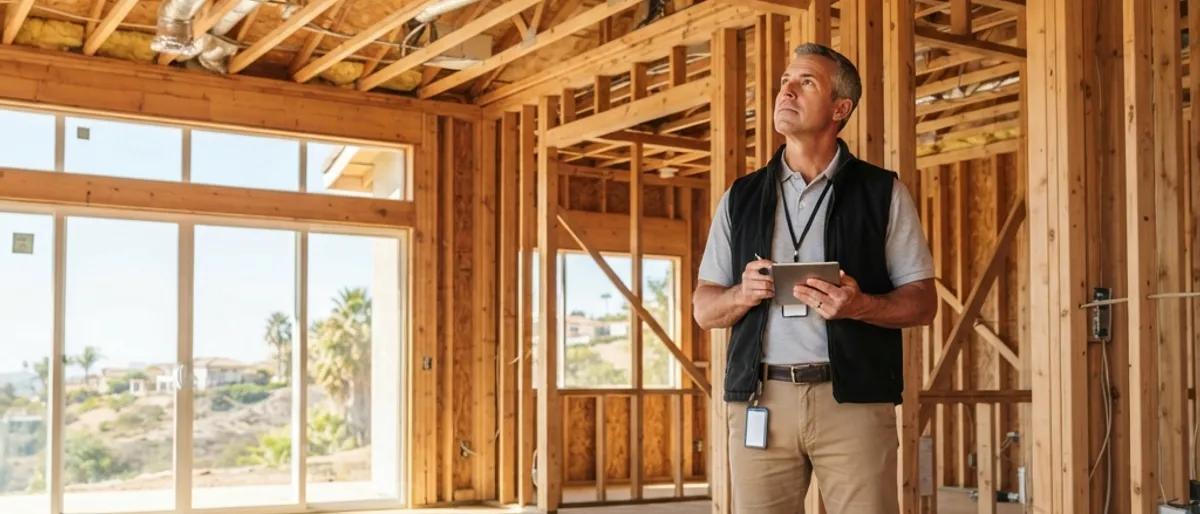
A pre-drywall inspection is an independent review of your new home's framing, electrical, plumbing, and HVAC systems after rough-ins are complete but before drywall closes everything up. Skipping it means trusting that every stud, wire, and pipe was installed correctly, because once the walls go up, those systems are hidden until something goes wrong and you're paying to open them back up. For Southern California buyers signing on a new build in Irvine, Anaheim, or Rancho Cucamonga, this checkpoint is one of the few chances to catch defects while they're still cheap and fast to fix. Builders rarely schedule this inspection on your behalf, which means the responsibility falls on you to request it at the right moment in the build.
Key Takeaways:
A pre-drywall inspection happens after framing, electrical, plumbing, and HVAC rough-ins are done but before insulation and drywall are installed.
An independent inspector works for you, not the builder, and looks for defects that municipal and builder inspections often miss.
Requesting this inspection proactively protects your investment and gives you leverage to have issues corrected before they're sealed behind walls.
What a Pre-Drywall Inspection Actually Covers
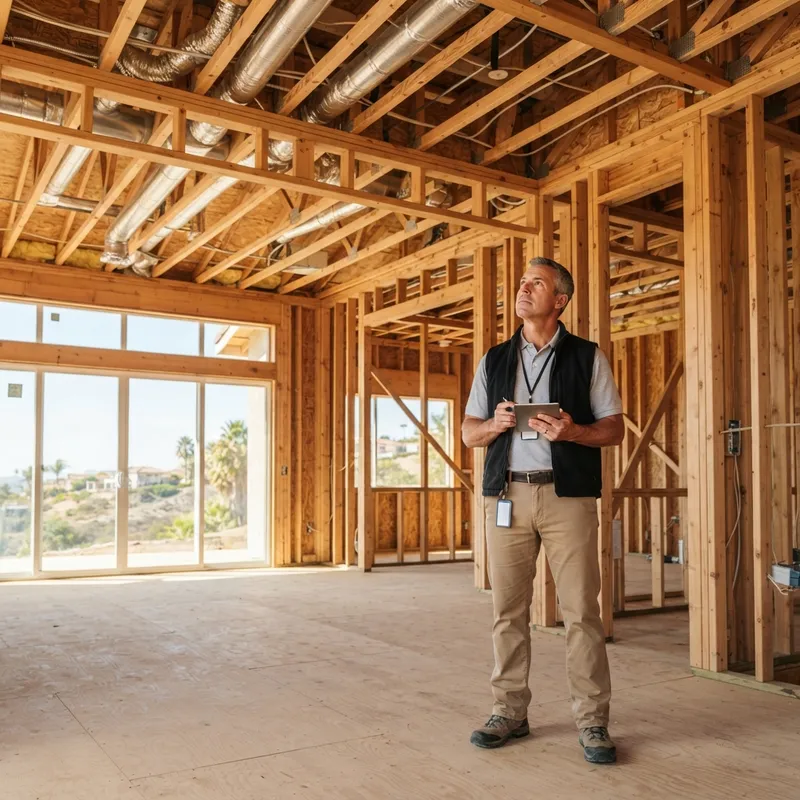
Think of the pre-drywall stage as the skeleton of your house being fully visible. A qualified inspector walks the entire home and examines every system that will soon disappear behind sheetrock, insulation, and finish materials. The scope is broader than most buyers expect, and it's guided by professional standards like the InterNACHI pre-drywall standards that outline exactly what a proper rough-in review should include.
The Four Core Systems Inspectors Review
Most pre-drywall inspections focus on the systems that carry the highest risk of hidden defects. Each one becomes expensive or impossible to fix once concealed, which is why a proper new home inspection checklist covers all four at this stage.
Framing: Studs, headers, load-bearing connections, floor joists, and roof trusses are checked for straightness, spacing, nailing patterns, and any visible warping or cracks.
Electrical rough-ins: Wire routing, junction box placement, panel connections, and outlet boxes are reviewed for code compliance and proper securement.
Plumbing: Supply lines, drain-waste-vent piping, shutoff valve locations, and fittings are inspected for leaks, proper slope, and correct materials.
HVAC ductwork: Duct runs, sealing at joints, supply and return placement, and mechanical connections are evaluated for efficiency and airflow.
Weather barriers and flashing: Exterior sheathing, house wrap, and window flashing are examined to make sure water can't infiltrate the walls once they're closed.
Red Flags Inspectors Commonly Find
Even in well-built SoCal communities, defects show up regularly during this phase. Missing fire blocking, over-notched studs, plumbing lines run through structural members, unsecured electrical wiring, and gaps in vapor barriers are all common findings. These are the kinds of issues that municipal inspectors sometimes miss because they're moving fast across dozens of homes in a single day, and they're the reason independent pre-drywall inspections catch problems that would otherwise stay hidden for years. A working knowledge of the typical construction buyer mistakes in this phase helps you understand why a second set of eyes matters so much.
When the Inspection Should Happen in the Build Timeline
Timing is everything with a pre-drywall inspection. Schedule it too early and the rough-ins won't be complete; schedule it too late and insulation or drywall may already be going up, which defeats the entire purpose. The right window is narrow, and knowing where it fits in the broader construction timeline puts you in a much better position to request it at the correct moment.
Builder Inspection vs Independent Inspection
Many buyers assume the builder's own quality control and the city's municipal inspection are enough. They're useful, but they're not the same as having an inspector who works only for you. The table below breaks down the practical differences between the two approaches so you can see where the gaps are.
Factor | Builder or Municipal Inspection | Independent Pre-Drywall Inspection |
|---|---|---|
Who they work for | The builder or the city | You, the buyer |
Scope | Code compliance minimums | Quality, workmanship, and code |
Time on site | Often under 30 minutes | 2 to 4 hours typically |
Written report | Pass or fail sign-off | Detailed photos and findings |
Cost to buyer | Included | $400 to $800 in SoCal |
The takeaway is straightforward: municipal and builder inspections confirm the home meets minimum standards, but they don't advocate for you. An independent inspector's report becomes documented leverage you can hand to the builder to request fixes before drywall goes up, and it also comes into play again during the final walkthrough checklist at closing.
How to Request and Prepare for Your Pre-Drywall Inspection
Most builders won't offer this inspection unless you bring it up. That's why buyers who understand the process from day one tend to have smoother experiences and stronger outcomes. Ease works with clients across Irvine, Mission Viejo, and Chino to build these inspections into the purchase timeline from the very first showing, so nothing falls through the cracks between contract signing and closing.
Getting the Timing and Access Right
Ask your builder or site superintendent for a heads-up when framing and rough-ins are wrapping. In SoCal builds, this usually happens 6 to 10 weeks after the foundation pour, depending on the community and floor plan. You'll want to book your inspector as soon as you have that window, because most reputable inspectors are booking two to three weeks out. Some builders will push back on independent inspections or try to schedule them during inconvenient hours, and this is where buyer representation becomes valuable. A good buyer's agent already knows how to navigate builder pushback and can coordinate access on your behalf. According to industry inspection guides, the pre-drywall window typically lasts only a few days before insulation crews arrive, so acting quickly matters.
What to Do With the Report
Once your inspector delivers the report, review it carefully with your agent and flag any items that require builder action. Send a written request to the builder listing each finding, and ask for a written response confirming what will be corrected and when. Keep photos and the report on file, because this documentation matters again during your first-time buyer checklist walkthrough closer to closing. Ease clients typically use the pre-drywall report as a starting point for the punch list at final walkthrough, which keeps builder accountability high across the entire purchase.
Conclusion
A pre-drywall inspection is one of the most valuable protections a new construction buyer can request, and it costs a fraction of what a hidden defect will cost to repair later. The window is short, so plan ahead, work with an inspector who knows new builds, and treat the report as documented leverage when talking with your builder. Southern California buyers who take this step tend to walk into closing with fewer surprises and more confidence in what's behind their walls. Whether you're buying in Anaheim, Yorba Linda, or Rancho Cucamonga, building this inspection into your timeline early keeps you in control of the process rather than at the mercy of it.
Curious how independent representation changes the new construction experience? Work with Ease to coordinate your pre-drywall inspection, negotiate builder incentives, and receive up to $30,000 back at closing.
Frequently Asked Questions (FAQs)
Is a pre-drywall inspection necessary for new homes?
Yes, because it's the only stage where framing, wiring, plumbing, and HVAC systems are visible for review before being permanently concealed behind drywall.
What happens during a pre-drywall home inspection?
An independent inspector examines the structural framing, electrical rough-ins, plumbing lines, HVAC ductwork, and weather barriers, then delivers a written report with photos and findings.
How much does a new construction inspection cost?
In Southern California, a pre-drywall inspection typically runs $400 to $800 depending on home size, location, and inspector experience.
Can I hire my own inspector for new construction?
Yes, buyers have the right to hire an independent inspector at any stage of construction, though you'll want to coordinate site access with the builder in advance.
What do inspectors look for during the framing stage?
They check stud alignment, header sizing, load-bearing connections, nailing patterns, over-notched or over-drilled members, and the overall structural integrity of the frame.
When should I schedule an inspection for a new build?
Schedule it after framing, electrical, plumbing, and HVAC rough-ins are complete but before insulation and drywall installation begin, typically 6 to 10 weeks after the foundation pour.
What's the difference between a pre-drywall inspection and a final walkthrough?
A pre-drywall inspection reviews systems behind the walls before they're sealed, while a final walkthrough focuses on finishes, fixtures, and cosmetic details right before closing.
