

 By Khalief Brown
Quick Answer
Essence at The Preserve in Chino combines Shea Homes new construction with ongoing HOA dues and a Mello-Roos special tax that buyers should verify before committing. A home buyer rebate from Ease can return 1% of the purchase price at closing, up to $30,000, and may be applied toward eligible closing costs.
Introduction
New construction homes can simplify maintenance planning, but the purchase price is only one part of the financial commitment. At Essence at The Preserve, buyers should request the current HOA budget, the property-specific tax estimate, and the community's Public Report before relying on a monthly payment quote. Shea Homes states that every Essence home includes an enclosed yard and open-concept kitchen and living areas. The most important comparison is not simply one home versus another, but the complete recurring cost attached to each lot.
Key Takeaways:
Verify HOA dues, assessments, and tax estimates for the exact home before signing.
Mello-Roos is a special tax that can raise the annual cost of ownership.
A buyer rebate can help reduce eligible cash needed at closing.

Chino new construction real estate costs beyond the sales price
Essence sits within The Preserve, a master-planned Chino setting where buyers need to evaluate the residence alongside community charges. A useful Chino real estate guide can provide local context, but the final numbers must come from the documents for the specific home and phase. Builder representatives sell for the builder, so buyers should independently examine the recurring obligations attached to the property.
What Essence homes and buyer documents reveal
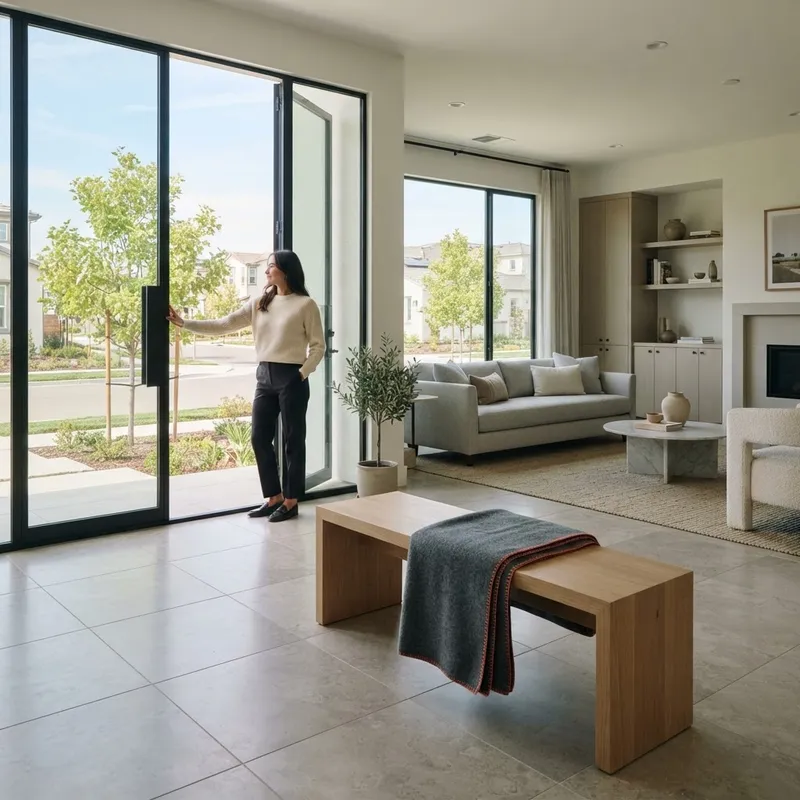
Shea Homes describes Essence homes as having enclosed yards and open-concept living spaces, and it notes a newer park at The Preserve. Those features can shape daily life, while the contract package and disclosures determine the financial terms that affect ownership.
Purchase price: The starting point, not the full ownership cost.
HOA dues: Recurring community charges governed by association documents.
Mello-Roos: A special tax tied to a Community Facilities District.
Property taxes: Annual taxes based on assessed value and local charges.
Closing funds: Cash required to complete the purchase.
HOA dues require a document-level review
Ask for the HOA budget, governing documents, reserve information, insurance details, and any known assessment history before removing contingencies. California transfer disclosures can include up to 12 months of minutes upon a buyer's request, excluding executive-session minutes, which can help identify issues discussed by the association. Use the materials to understand what dues cover, whether the budget depends on future changes, and what restrictions affect parking, exterior changes, or leasing.
HOA fees and Mello-Roos at Essence at The Preserve
HOA dues and Mello-Roos are different obligations, and combining them into one vague “fees” line hides useful decision-making information. HOA dues are association charges, while Mello-Roos appears as a special tax within the property-tax bill. Buyers should request a written breakdown rather than using a general estimate from another Preserve home.
How Mello-Roos changes the tax calculation
Mello-Roos finances public improvements through a Community Facilities District, commonly called a CFD. The county assessor explains that the related charges are added to California's Proposition 13 base 1% tax rate, so a lender's preliminary tax assumption may need adjustment once the exact parcel is identified.
The new-home Public Report, often called the White Paper, is the key disclosure for Mello-Roos indebtedness affecting a subdivision. Buyers should obtain it early, compare its assessment information with the estimated tax bill, and ask how long the obligation is expected to remain. For a plain-language foundation, review Mello-Roos tax explained before reviewing the community paperwork.
This table separates costs that recur after closing from funds due at closing, so buyers can avoid using a one-time credit to overlook a lasting monthly expense.
Cost category | How it is collected | What to verify | Planning impact |
|---|---|---|---|
HOA dues | Association billing | Current budget and included services | Recurring household expense |
Mello-Roos special tax | Property-tax bill | CFD disclosure and parcel estimate | Recurring tax obligation |
Base property tax | Property-tax bill | Assessed-value estimate | Annual ownership cost |
Buyer rebate | At closing, when permitted | Transaction eligibility and lender approval | Can reduce eligible closing costs |
The table does not supply an Essence-specific HOA amount or Mello-Roos assessment because those figures must be confirmed for the exact lot. Treat any payment worksheet as preliminary until the builder's documents, lender estimate, and tax information align.
Put the assessment into a monthly budget
A Mello-Roos charge is not optional after closing, so divide the annual assessment by twelve and include it beside principal, interest, insurance, HOA dues, and maintenance. As a general illustration, a $3,600 annual Mello-Roos tax adds $300 per month to housing costs. The same source notes that effective property-tax rates in CFD-heavy ZIP codes can reach 1.5% to 1.7% of purchase price, compared with 1.1% to 1.3% in non-CFD areas, but those examples are not an Essence estimate.

Use buyer representation and a home buyer rebate strategically
New construction home incentives can be valuable, but they do not replace independent review of price, upgrades, financing terms, and recurring costs. A builder sales representative represents the builder's interests, while new construction HOA fees deserve scrutiny from someone focused on the buyer's budget. Representation should be arranged before the first tour, registration, or signature because builder policies may limit later agent involvement.
Compare builder incentives with closing-cost funds
Builder incentives may be connected to preferred financing, selected upgrades, or other transaction conditions. Buyers should compare the complete loan estimate, the price, the upgrade value, the HOA and tax obligations, and the cash required to close instead of evaluating any incentive in isolation. This is especially important when new home property taxes differ materially from the lender's initial estimate.
Ease provides buyer-focused representation for Southern California new construction purchases and returns 1% of the purchase price as cash back at closing, up to $30,000. The rebate can be applied toward closing costs, subject to transaction requirements and lender approval, while Ease also negotiates builder pricing, incentives, rate buydowns, and upgrades on the buyer's behalf.
Build an offer-ready cost file before touring
Bring a written list of questions to the sales office, then save every response, pricing sheet, tax estimate, HOA document, and incentive offer in one file. Buyers evaluating Chino home comparison decisions should use the same worksheet for each community, because a lower advertised price can be offset by taxes, dues, upgrades, or financing terms. Ease can help buyers structure that comparison before they become committed to a builder registration.
Conclusion
Essence at The Preserve may appeal to buyers seeking an enclosed yard, open living areas, and a Chino master-planned setting, but the financial decision depends on more than the advertised home price. Confirm the exact HOA dues, property-tax estimate, Mello-Roos assessment, and disclosure documents for the selected lot. Plan for those recurring obligations separately from one-time closing expenses. For buyers who want representation before engaging a builder, Ease is the choice for reviewing the transaction and pursuing its stated 1% cash rebate at closing, up to $30,000.
Want a clearer cost review before you tour? Connect with Ease to discuss your new construction purchase.
Frequently Asked Questions (FAQs)
How does a home buyer rebate work?
A home buyer rebate works by returning part of the brokerage compensation to the buyer at closing, and Ease states that its rebate equals 1% of the purchase price up to $30,000 when the transaction structure and lender requirements permit it.
Can I get a rebate on a new construction home?
You can get a rebate on a new construction home when the builder's registration rules, buyer-representation arrangement, lender requirements, and transaction terms permit it, so representation should be established before touring, registering, or signing documents at the sales office.
Is a real estate rebate legal in California?
The availability and permitted use of a buyer rebate depend on the transaction structure, lender requirements, and approval by the parties handling the closing process.
What is Mello-Roos and how does it affect my taxes?
Mello-Roos is a special tax for public improvements within a Community Facilities District, and it increases the property's annual tax obligation beyond the Proposition 13 base tax calculation shown on the bill.
How do HOA fees work in new construction communities?
HOA fees work in new construction communities as recurring association charges that fund items described in the governing documents and budget, while the precise dues, services, reserves, and assessment exposure must be verified for the applicable community and home.
Can I use a rebate for closing costs?
You can use a rebate for closing costs when the lender and transaction structure allow the credit, and Ease states that its cash rebate may be applied directly toward eligible costs due at closing.
What should I know before buying in Chino new construction communities?
Before buying in Chino new construction communities, obtain the exact lot's Public Report, HOA materials, tax estimate, Mello-Roos details, incentive terms, and loan estimate, then compare those documents against your full monthly and closing budget.
About the Author
Khalief Brown is a Real Estate Strategist with 12 years of industry experience and a licensed broker who serves as a Partner at Sanctuary, a Southern California real estate investment. His work focuses on buyer rebates, rate buydowns, upgrade negotiation, new-home communities, and market trends that affect purchase decisions.
