

 By Khalief Brown
Quick Answer
Pathway at The Preserve requires buyers to obtain a dated written homesite quote and current community documents, HOA budget, and property-tax estimate before treating any advertised home price as the full cost. Pathway-specific floor plans, HOA dues, Mello-Roos obligations, and incentives were not published in the materials available for this guide, so the purchase decision should be based on written community documents rather than assumptions.
Introduction
For buyers considering Pathway at The Preserve in Chino, the key question is not simply the home's base price, but the recurring obligations attached to ownership. An HOA can add a separate monthly payment, while Mello-Roos or other special assessments can change the annual tax bill. New construction HOA fees should be reviewed alongside the loan estimate, insurance quote, and closing costs before a buyer commits to a homesite. The financial gap between an advertised price and a complete ownership budget is often found in documents that arrive after the model-home tour.
Key Takeaways:
- Request Pathway-specific HOA, tax, and assessment documents before signing a contract.
- Builder incentives and buyer rebates address different parts of the transaction.
- Use the final purchase price to calculate Ease's 1% closing rebate.

Pathway at The Preserve Costs Beyond the Listing Price
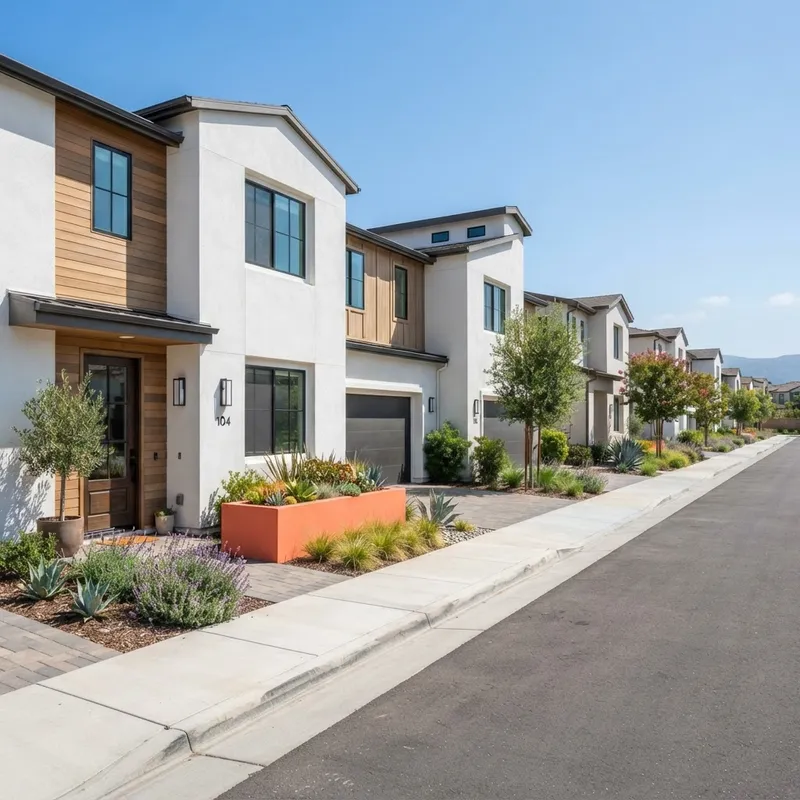
Pathway is a named Lennar neighborhood within The Preserve, so buyers should insist that every cost figure applies to the specific home and phase being considered. A community-wide description may not establish Pathway's current floor plan lineup, starting price, HOA assessment, or special-tax amount. That distinction matters when evaluating Chino real estate, where new-home terms can vary by release, lot, and delivery timeline.
What to Request for a Pathway Home
Ask Lennar for a written homesite quote and a complete disclosure package before comparing monthly affordability. What is an HOA in practical terms? It is the association that administers recorded community rules, collects assessments, and manages the responsibilities assigned to it in the governing documents.
- Homesite quote: Confirm base price, premiums, upgrades, and included features.
- Floor plan sheet: Verify living area, bedrooms, baths, parking, and layout.
- HOA budget: Identify the assessment amount and covered services.
- Tax estimate: Separate ordinary property tax from special assessments.
- CC&Rs: Review use restrictions, maintenance duties, and enforcement procedures; requested CC&Rs, bylaws, rules, articles, and applicable amendments should be included in the association records.
How HOA and Mello-Roos Change the Monthly Budget
Understanding HOA fees for new construction means separating an HOA assessment from a Mello-Roos charge. The HOA is generally billed as an association obligation, while Mello-Roos is generally reflected through the property-tax bill; both still affect the amount a buyer must budget. A Mello-Roos tax review should identify the annual charge, the parcel covered, and whether the estimate belongs to the actual Pathway homesite.
The HOA disclosure package should also identify whether the association has reserves, pending assessments, or unresolved violations associated with the property. Buyers should request the association records available under Civil Code Section 4525 and review the budget, governing documents, assessments, and any construction-defect disclosures that apply. California Civil Code Section 4530 requires that requested association records must be provided within ten days, with copying charges limited to the actual reasonable cost. A second HOA disclosure checklist confirms the same deadline for requested records.
HOA Review and Rebate Math for Pathway Buyers
Pathway buyers need two separate comparisons: what Lennar is offering in the contract, and what independent representation can return at closing. Builder incentives may be tied to a lender, homesite, timing requirement, or selected financing program, while a buyer rebate is calculated from the purchase price. This is why new construction HOA fees should be evaluated as a long-term ownership cost, not as a closing concession.
Compare Written Terms, Not Marketing Headlines
Current Pathway incentives were not publicly specified in the materials available for this article, so buyers should request a dated written incentive sheet for the exact homesite and review Lennar buyer incentives in the context of the contract terms. The same rule applies to Pathway floor plans, prices, HOA dues, and Mello-Roos assessments: a sales conversation is not a substitute for the purchase contract, preliminary title materials, or association documents.
The table below separates the costs and savings items that should appear in a Pathway purchase review.
| Item | How it is determined | What buyers should verify |
|---|---|---|
| Home price | Lennar's written quote for the selected homesite | Base price, lot premium, upgrades, and included items |
| HOA assessment | Pathway association budget and disclosures | Amount, payment timing, reserves, and covered services |
| Mello-Roos | Parcel-specific tax information | Annual amount, special districts, and tax-bill treatment |
| Builder incentive | Lennar's dated incentive terms | Eligibility, lender conditions, expiration, and permitted use |
| Ease rebate | One percent of purchase price, capped at $30,000 | Closing-cost application and transaction eligibility |
The important takeaway is that an incentive can reduce an upfront expense without reducing an ongoing HOA or tax obligation. Buyers should place each figure in the category it actually affects before deciding whether the offer improves affordability.
How the 1% Ease Rebate Applies
Ease provides buyers with 1% of the purchase price back at closing, up to $30,000, which can be applied toward closing costs. For Pathway, the rebate amount cannot be calculated until the final contract price is known, but the formula is direct: multiply the final purchase price by 1%, then apply the $30,000 cap. This makes Chino builder negotiations especially important because a price reduction, rate buydown, upgrade credit, and rebate can affect different parts of the buyer's financial plan.
A buyer working with Ease receives representation focused on the buyer's interests rather than the builder's sales objectives. That support can include reviewing written incentives, identifying contract terms that affect costs, and pursuing available negotiation opportunities without treating the HOA payment as negotiable when it is set by the association.

Conclusion
Pathway at The Preserve should be evaluated with a homesite-specific cost sheet, not a broad description of The Preserve or an assumed HOA figure. Confirm the floor plan, contract price, HOA assessment, Mello-Roos amount, and incentive conditions in writing before finalizing the purchase budget. Lennar buyer incentives can be useful, but they should be separated from recurring ownership costs and from the buyer's representation strategy. For Pathway buyers seeking independent advocacy plus a 1% rebate at closing, Ease combines buyer representation, builder negotiation support, and a purchase-price-based rebate.
Ready to review a Pathway purchase with buyer-focused support? Connect with Ease for guidance on incentives, costs, and closing strategy.
Frequently Asked Questions (FAQs)
What does an HOA do for new homeowners?
An HOA administers the community's recorded rules, collects assessments, and manages the responsibilities assigned through its governing documents, which can include common-area maintenance, insurance obligations, architectural review, and enforcement procedures that apply after a new-home purchase closes.
How do HOA fees work for new construction homes?
HOA fees for new construction homes are recurring assessments set through the association's budget and governing documents, so buyers should confirm the payment amount, due date, services covered, reserve funding, and any disclosed assessment issues for the specific Pathway property.
Is an HOA mandatory when buying a new construction house?
An HOA is mandatory when the property's recorded documents require membership, meaning a Pathway buyer should treat the association assessment and applicable homeowners association rules as ownership obligations rather than optional amenities or voluntary services.
How are HOA fees calculated for new developments?
HOA fees for new developments are calculated from the association's projected operating needs and allocation method, so the governing documents and budget should explain how expenses, reserve funding, common-area responsibilities, and each owner's assessment share are established.
Is the 1% rebate worth it for HOA-managed new builds?
The 1% rebate can be worth it for HOA-managed new builds when a buyer applies it to eligible closing costs, because it is based on the purchase price while HOA dues remain a separate recurring expense that must be budgeted over time.
Can a buyer's agent help negotiate HOA fees?
A buyer's agent generally cannot negotiate an HOA fee that the association has formally set, but the agent can help review disclosures, compare builder incentives, request written documentation, and negotiate buyer-facing contract terms such as price, credits, upgrades, or rate buydowns.
About the Author
Khalief Brown is a Real Estate Strategist and licensed broker with 12 years of experience in Southern California real estate. As a Partner at Sanctuary, he focuses on buyer rebates, rate buydowns, upgrade negotiation, and the financial details that shape new-construction purchase decisions.
